



imagined a world where homes are not just built but crafted with precision and purpose. Kristen Henry, CTO, reveals how the process is transforming the future of housing.
A TRANSFORMATIVE DESIGN FOR CONCRETE SOLUTIONS
The field of architecture is continuously evolving, especially in the digital era, where technological advancements have introduced construction methods that are both time- and cost-efficient and more precise in design.
3D construction printing (3DCP), also known as additive manufacturing, involves the creation of components or complete structures using an automated 3D printer engineered explicitly for this purpose.
This innovation is poised to revolutionize the industry by addressing modern challenges commonly faced in construction, and trailblazer SQ4D is stepping up to meet these demands.
“The construction industry is facing a perfect storm of challenges: skyrocketing costs, labor shortages, and an urgent need for affordable homes. The founders of SQ4D saw an opportunity to modernize an outdated industry while delivering homes that are stronger and more attainable for the families who need them most.
“After first attempting to engineer a home-building robot that walked around with a nail gun to attach 2×4-inch pieces of lumber, automating the process using 3D printing technology emerged as the better solution,” opens Kristen Henry, CTO.
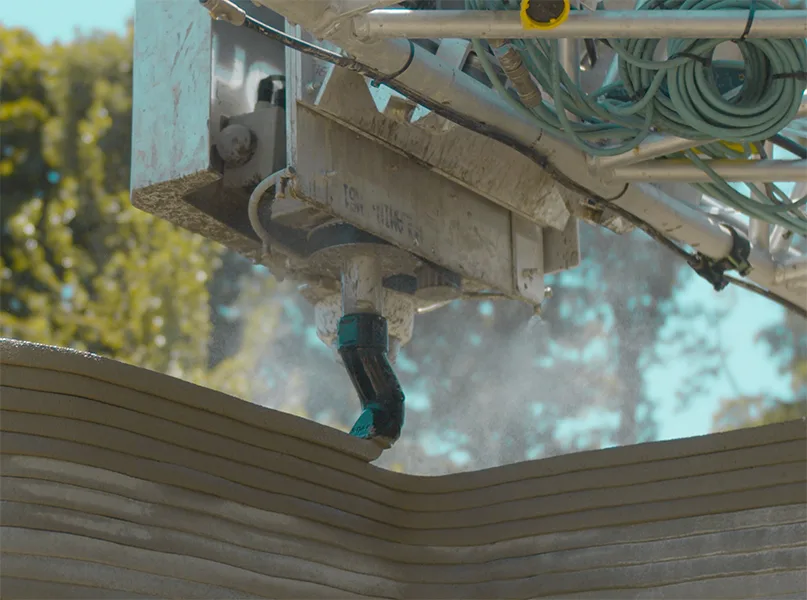
Technology is transforming the industry in remarkable ways. Indeed, the Autonomous Robotic Construction System (ARCS) has had a significant impact.
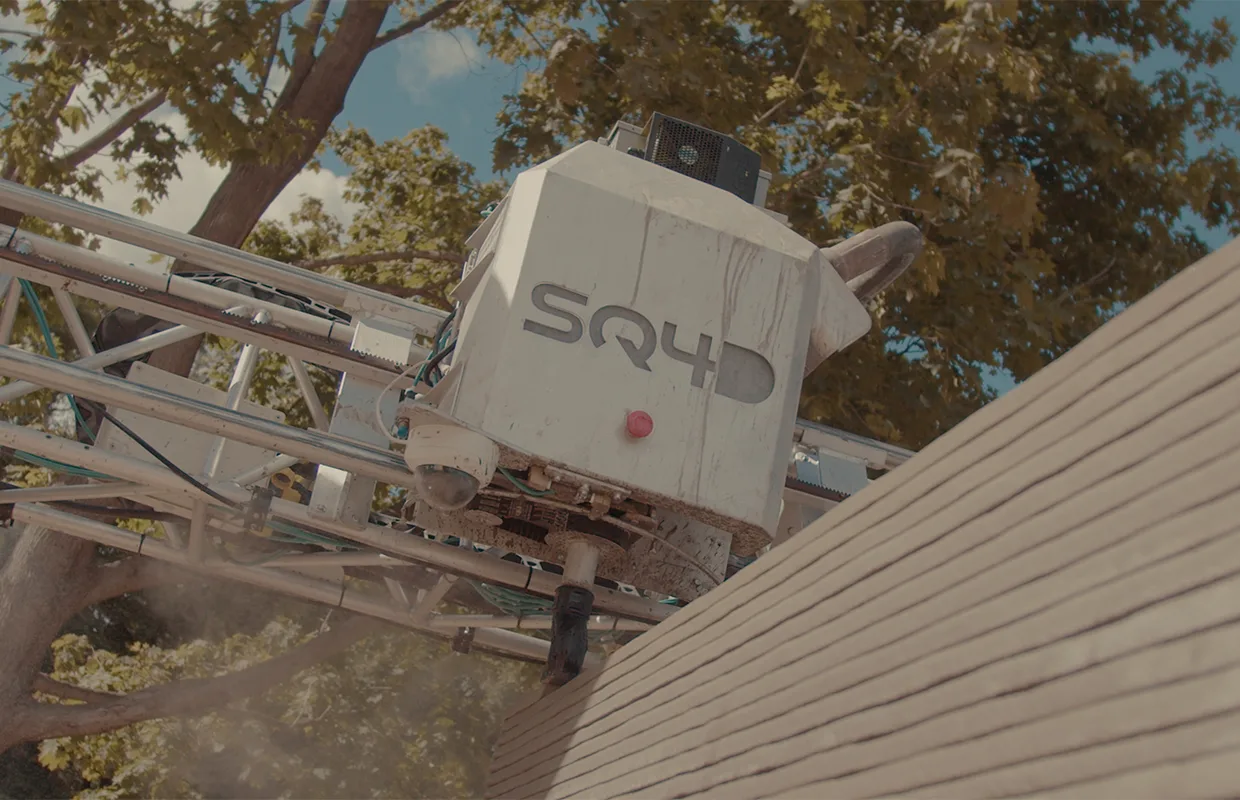
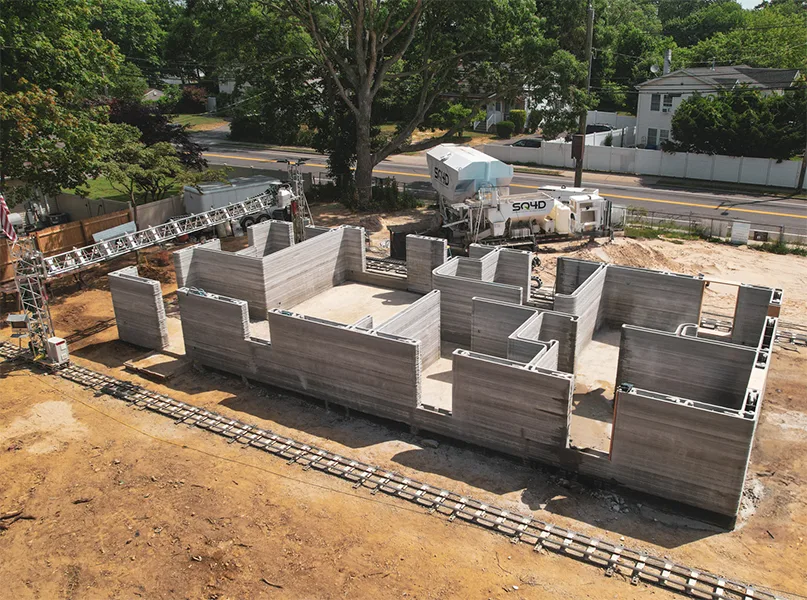
SQ4D’s ARCS is a large-scale, on-site 3D printer that automates home construction by extruding concrete layer by layer, enabling the company to print footings, foundation walls, slabs, interior and exterior walls, and insulation for the structure.
The machine consists of a gantry-style 3D printer, silo, volumetric, and pump, all designed to work together and streamline steps in the build process.
“By replacing dozens of traditional labor-intensive steps, ARCS can build faster, with fewer workers, and significantly reduce material waste.
“We have demonstrated that it can print full-size permitted homes in a fraction of the time required by traditional methods, offering potential cost savings and greater durability compared to wood-frame construction.
“Furthermore, it challenges long-standing building practices, pushes regulators to modernize building codes, and introduces a path toward more affordable and scalable housing solutions,” explains Henry emphatically.

“By fundamentally changing how structures are built, we use automation and material efficiency to reduce the environmental footprint of construction”
Kristen Henry, CTO, SQ4D
REVOLUTIONARY SOLUTIONS
SQ4D’s innovative 3DCP methods improve multiple aspects of the process, including automating many labor-intensive phases of building.
“Automation slashes labor requirements, minimizes material waste, and eliminates the need for formwork, framing, and multiple subcontractor steps.
“At the same time, quality and efficiency are enhanced by a digitally controlled process, ensuring consistent, repeatable results with fewer errors,” expresses Henry.
The printed concrete walls provide added durability, fire resistance, and long-term structural stability, while integrated processes, such as installing electrical boxes during printing, streamline subsequent trades.
Additionally, a spray-paint tool marks the exact locations of stub-ups and outlets, eliminating electricians’ and plumbers’ need for tape measures.
The concrete used has high compressive strength, far exceeding all building code requirements, and SQ4D’s homes are reinforced with vertical and horizontal rebar, providing ample support. These more durable homes are also cheaper to insure.
Together, these advances enable homes to be delivered faster, at lower costs, and with a higher degree of precision than traditional construction methods.
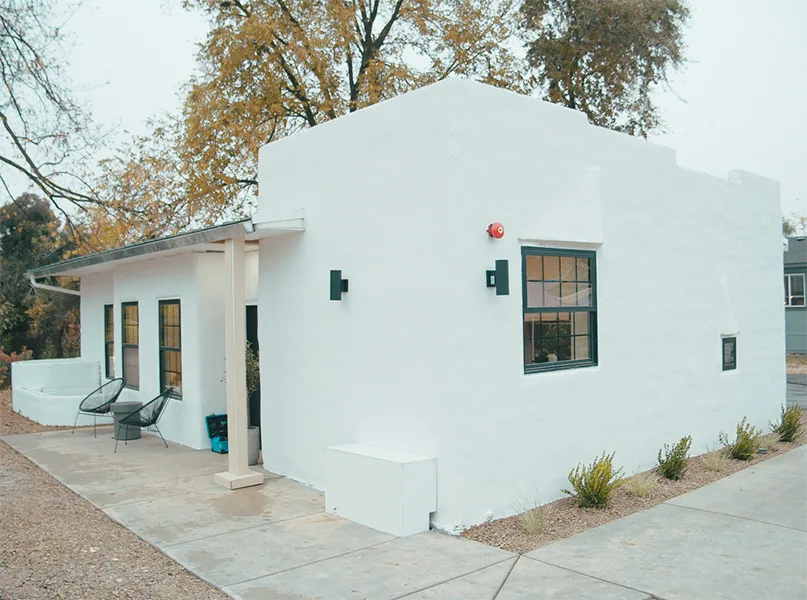
Moreover, SQ4D addresses sustainability and environmental concerns in its construction practices through innovative 3D printing techniques.
“Typically, a great deal of material waste is sent to landfill from construction sites, and any cut sheetrock, siding, trim, lumber, or packaging is discarded.
“By fundamentally changing how structures are built, we are using automation and material efficiency to reduce the environmental footprint of construction.,” she observes.
“In 3DCP, much of the material is removed, and the concrete is mixed on-site in the amounts required. Any extra produced during start-up or cleanout is poured into forms to create roadblocks, pavers, tiles, or any desired shape.”
The homes themselves also benefit from durable, fire-resistant concrete walls that require less long-term maintenance and can offer improved energy performance.
“Unlike traditional construction, which requires upgrading from a 2×4-inch piece of lumber to a 2×6, 2×8, 2×10, or 2×12-inch piece at a considerable cost, 3D-printed beads can be placed anywhere to provide far more insulation and much higher R-values, making the homes more energy-efficient,” Henry tells us resolutely.
A SHIFT FROM TRADITION
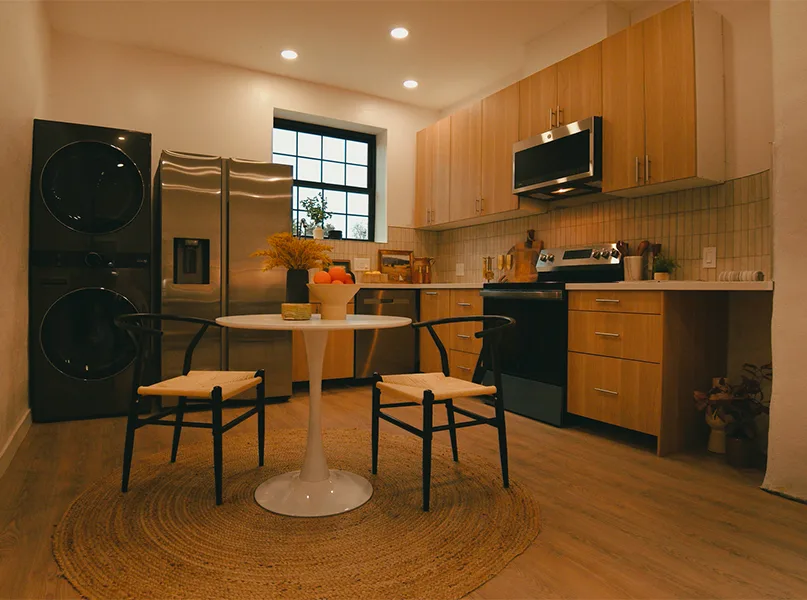
3D-printed houses offer several advantages in terms of aesthetics, customization, and functionality.
Their architectural design fundamentally differs from traditional construction methods because it relies on digital modeling and the printer’s capabilities.
“Creating curves or wavy patterns on a 3D printer is just as simple as printing straight lines, unlike stick-built construction,” Henry states assuredly.
Instead of designing around straight lines and standardized materials, architects can create organic curves, sweeping forms, unique wall textures, and complex geometries that would be expensive or impractical to build conventionally.
“In our various homes, we have printed sweeping kitchen islands, planters, tables, chairs, hooded windows, and even parapets. This digital freedom enables far greater customization, since changing a layout is as simple as adjusting a computer-aided design (CAD) file.
“A potential homeowner can see the model of their future home in virtual reality, rather than just as a 2D sketch on a set of plans,” Henry points out.
Another advantage is that 3DCP technology can assist humanitarian organizations in the reconstruction of disaster-affected areas and providing affordable housing, as it has core strengths that directly address the challenges in these environments.
“3DCP automates much of the process, significantly reducing labor requirements, which is important in disaster zones where skilled crews may be unavailable,” she highlights.
“Material efficiency and reduced waste also lower overall project costs, making it feasible to deliver more housing with limited budgets. The printed concrete walls are strong, fire-resistant, and able to withstand harsh climates, flooding, and high winds.”
This durability is essential in disaster-prone areas and regions with limited long-term maintenance. By using locally sourced materials, organizations can build housing directly where it is needed.
“In the long-term, I expect 3D printing, robotics, and advanced materials to help solve affordable housing shortages, reduce environmental impacts, and transform construction into a safer industry”
Kristen Henry, CTO, SQ4D
AUTOMATION AND AFFORDABILITY
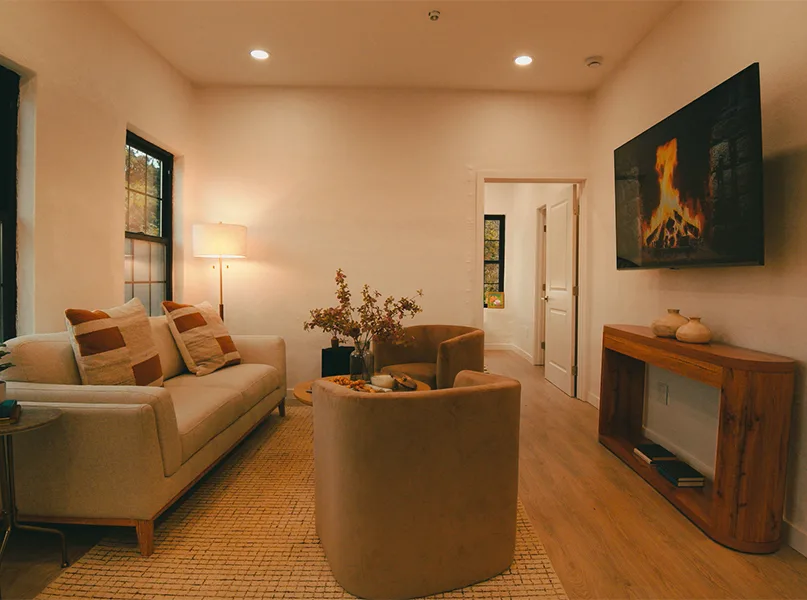
As projects and developments progress at SQ4D, a transformative future for the construction industry is approaching.
“What excites me most about our company is its transition from proving the technology in R&D to deploying it in real projects. Our continued refinement of ARCS allows us to push toward larger and more complex builds,” Henry shares enthusiastically.
“Each new project shows greater speed, improved print quality, and a more straightforward path toward scalable, community-level developments rather than one-off demonstrations. I am also thrilled about the developments in making the process even more eco-friendly with carbon sequestration and different aggregates.”
Henry believes that if SQ4D can develop homes that are cheaper, stronger, safer, and faster to build, while also being more sustainable, it can play a significant role in tackling the housing affordability crisis.
Meanwhile, these structures will be more durable in the face of a changing climate, all while benefiting the environment. This approach truly represents the best of all worlds.
“I envision the construction industry entering a new era of automation and digitization, with 3D printing playing a central role. Homes will be designed with more flexibility, built faster and more sustainably, and tailored more easily to individual needs or community requirements.
“In the long-term, I expect 3D printing, robotics, and advanced materials to help solve affordable housing shortages, reduce environmental impacts, and transform construction into a safer industry,” Henry positively concludes.
This article was produced by the editorial team at North America Outlook and published as part of the Outlook Publishing global network of B2B industry magazines.
Outlook Publishing delivers industry insights, company stories, and sector coverage across manufacturing, mining, construction, healthcare, supply chains, food production, and sustainability.
North America Outlook provides ongoing coverage of organisations and developments shaping industries across North America.