




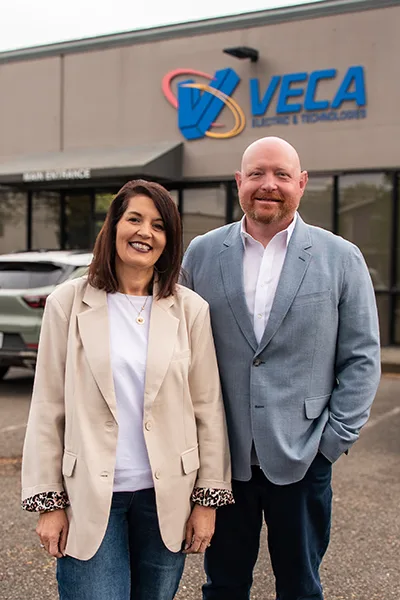
As VECA Electric & Technologies celebrates 80 years of progress, it has evolved by adapting to the dynamic demands of modern industries. Chief Operations Officer, Jesse Chapman, and Chief Administration Officer, Laura Rannow, discuss the company’s journey to honor the past while embracing the future.
CURRENT INNOVATIONS SPARK A TIMELESS LEGACY
1943 was a pivotal year in US history; the country’s shift from a defensive to an offensive stance in World War II (WWII) significantly impacted the economic and social landscape, shaping industries during the conflict and beyond.
As a result, many companies eagerly contributed to the war effort; however, one notable enterprise subsequently emerged in 1946 – VECA Electric & Technologies (VECA).
The company took a proactive stance in supporting veterans as they transitioned back to civilian life by creating meaningful opportunities that focused on securing stable employment for returning service members.
Since its inception, VECA has evolved into a full-service electrical contractor serving a wide range of industries, including commercial construction, healthcare, transportation, data centers, manufacturing, as well as service and maintenance.
“This year marks VECA’s 80th anniversary, a milestone that reflects both longevity and our ability to adapt. The story begins with two brothers, Jeff and Bruce Pavey, who had a vision to create jobs for veterans returning home from WWII.
“The foundation of opportunity and purpose they established is still a core part of who we are today,” proudly opens Laura Rannow, Chief Administration Officer.
VECA currently operates throughout Washington and Idaho and has approximately 1,800 employees, including field electricians, project management, and office staff.
“Our services span the full lifecycle of electrical construction, from preconstruction and design support to installation, service, and long-term maintenance.
“We have strong capabilities in low-voltage systems, technology integration, and alternative project delivery methods, but what truly sets us apart is our ability to scale while still maintaining our culture and values,” Jesse Chapman, Chief Operating Officer, emphatically adds.
NAVIGATING NEW PATHS
In 1987, Executive Chairman, Tom Fairbanks, purchased VECA with a commitment to carry forward its legacy.
His guiding principle – treating others the way he would want to be treated – continues to shape the company’s culture and business practices.
“We initially started as a traditional electrical contractor but have since expanded into complex, technology-driven environments. The biggest shift has been moving from installing electrical systems to becoming a strategic partner in project delivery,” Rannow explains.
“Presently, we’re heavily involved in preconstruction, coordination, and optimization, well before anything is built in the field. Therefore, rather than reacting to industry changes, we’ve tried to stay ahead of them, especially in areas like prefabrication, virtual design and construction (VDC), and workforce development.”
Consequently, VECA is well-positioned to leverage its experience to foster innovation in future projects.
“Many companies struggle to navigate the area of innovation. They can get caught up in ‘that’s how we’ve always done it’ and stagnate, or be in such a rush to innovate that they abandon the core of what made them great in the first place.
“History can either anchor you or slow you down,” she cautions.
In the context of innovation and improvement, Chapman highlights what’s important, underscoring what drives VECA’s success.
“For us, experience gives us pattern recognition. We’ve seen what works, what doesn’t, and where risk tends to surface. This understanding enables us to innovate more confidently, not just experiment.
“We couple our experience with investment in new tools like artificial intelligence (AI), processes, and people. Innovation at VECA isn’t just about technology; it’s about improving outcomes in all areas of the business,” he tells us.

“We couple our experience with investment in new tools like AI, processes, and people. Innovation at VECA isn’t just about technology; it’s about improving outcomes in all areas of the business”
Jesse Chapman, Chief Operating Officer, VECA Electric & Technologies
INNOVATION IN ELECTRIFICATION
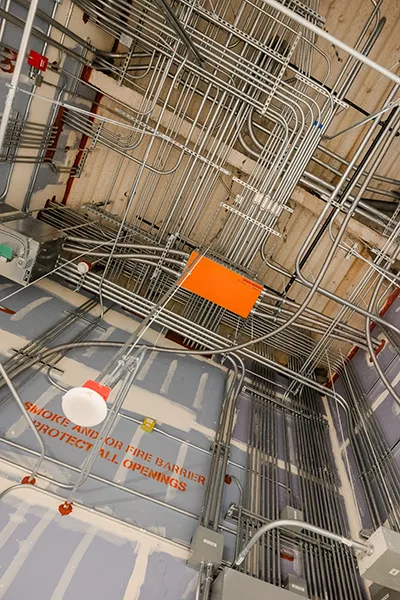
VECA employs innovative approaches in its VDC processes to streamline complex electrical projects, thereby improving project outcomes.
“In particular, our VDC team plays a critical role in reducing risk and improving coordination before construction begins. Moreover, we’ve built an in-house team of more than 40 VDC professionals, led by individuals with over 20 years of industry experience.
“That depth of knowledge allows us to go beyond modeling. Thus, we’re applying real-world constructability insight at the earliest stages of a project,” affirms Chapman.
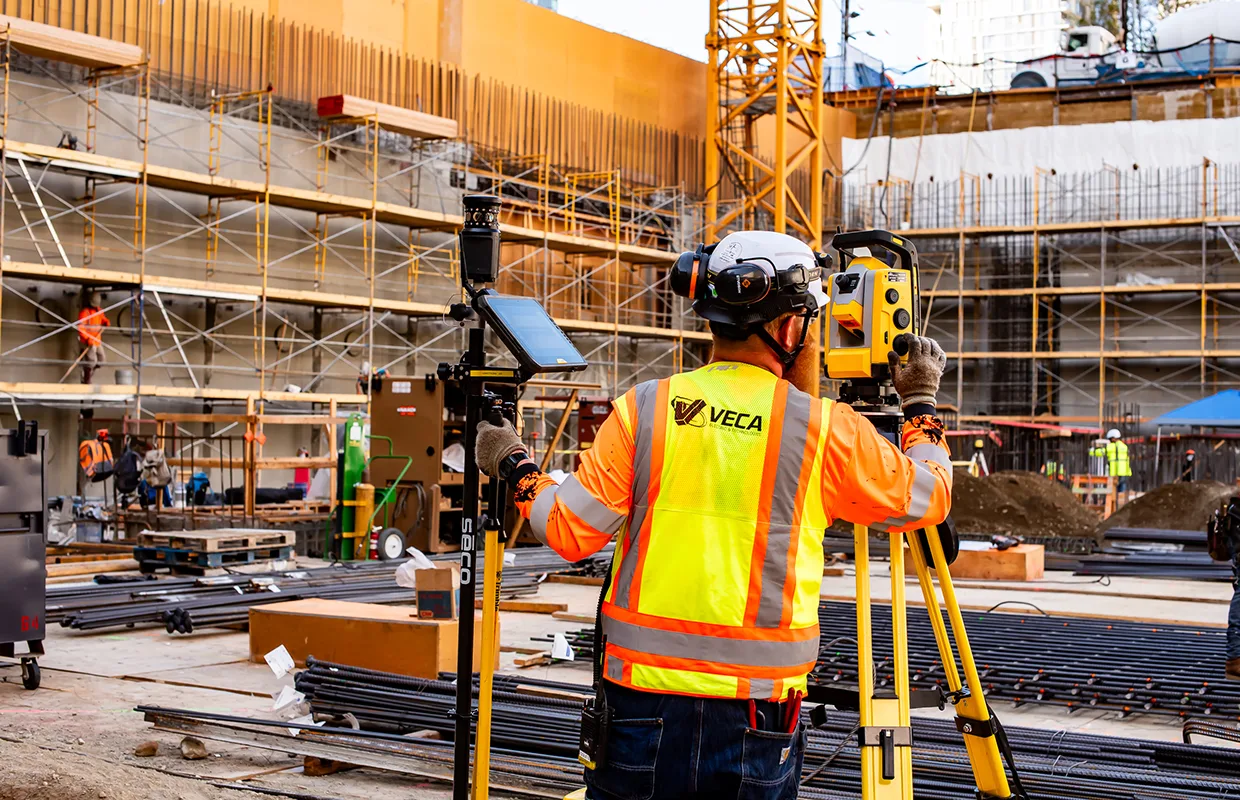
Furthermore, VECA leverages the latest technology, including platforms like Trimble and Autodesk, as well as emerging AI-driven tools to enhance coordination and decision-making.
Ultimately, these tools allow the company to create detailed models that identify conflicts early and improve overall installation efficiency.
“By doing this work upfront, we’re able to shift more scope from the field into controlled environments like prefabrication, which improves safety, increases productivity, and reduces on-site variability,” he outlines.
“The true value lies not only in the technology itself but also in how early and effectively we integrate VDC into the project. When embedded from the beginning, it drives better outcomes across the board, from schedule and cost to quality and field execution.”
Incorporating advanced technologies such as building information modeling (BIM) and VDC into project management processes offers VECA numerous advantages.
By investing in these internal systems and tools, the company enhances visualization, facilitates better decision-making, and fosters collaboration.
“We fully integrate BIM and VDC into our project workflows, not as standalone functions but as part of how we deliver work. This improves coordination with other trades, schedule reliability, cost predictability, and overall field efficiency.
“Additionally, it allows our teams to make better decisions earlier in the process, where the biggest impact occurs,” Chapman confirms.
The company is also collaborating with emerging companies like Vibework to develop AI workflows specific to VECA and automate repetitive tasks, while generating reports that provide rapid insights into the business.
CONQUERING A COMPLEX LANDSCAPE
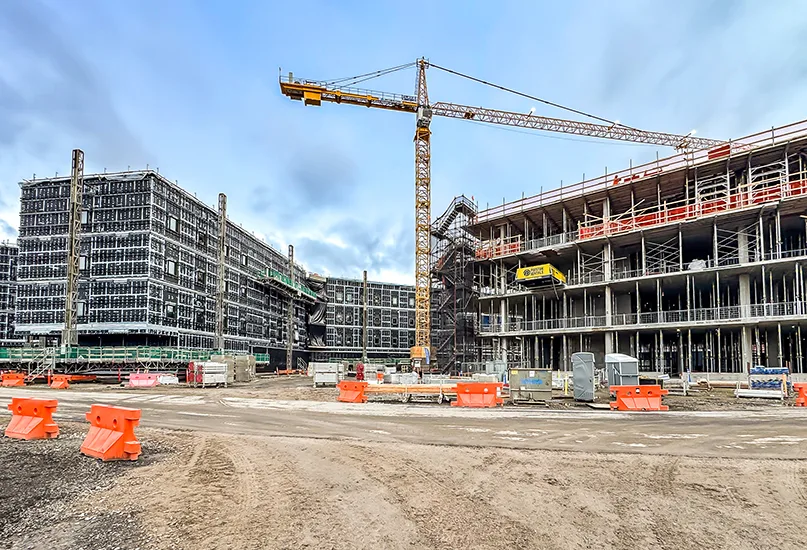
Challenges often arise in VECA’s projects; however, the company is always one step ahead.
“Sourcing sustainable materials and implementing new technologies is not always straightforward. Availability, cost volatility, and changing standards can create real obstacles,” Chapman notes.
Moreover, while business owners are interested in sustainability, they also require cost security and schedule reliability.
“Our approach is to stay aligned with suppliers, evaluate new products carefully, and integrate sustainable solutions where they provide overall value. We don’t want to go down the path of just chasing the latest trends; we’re looking for solutions that actually perform,” assures Chapman.
As VECA navigates these challenges, its commitment to continuous improvement and staying ahead of technological advancements is crucial.
“Over the last several years, we have seen significant growth in the data center market, driven by increasing demand for cloud computing, AI, and digital infrastructure. It’s a space that requires a high level of precision, reliability, and expediency.
“Our teams are supporting projects that involve complex power distribution, redundancy systems, and highly coordinated installations,” he informs.
These environments require technical expertise, and there is a growing emphasis on energy efficiency and sustainability within data centers, adding an additional layer of complexity.
“We have numerous opportunities in this market, but it requires disciplined execution. We need to remain focused on delivering systems that are both innovative and dependable,” highlights Chapman.

“We’re committed to developing our next generation of leaders, strengthening operational excellence in both the office and field, and continuing to invest in technology and training that support our people and projects”
Laura Rannow, Chief Administration Officer, VECA Electric & Technologies
COMMITMENT TO CORE CONVICTIONS
Currently, VECA’s focus is on sustainable growth, aiming to expand while preserving the culture and quality that define the company.
“We’re committed to developing our next generation of leaders, strengthening operational excellence in both the office and field, and continuing to invest in technology and training that support our people and projects.
“For us, sustainable growth also means ensuring our teams are supported, equipped, and positioned for success,” asserts Rannow.
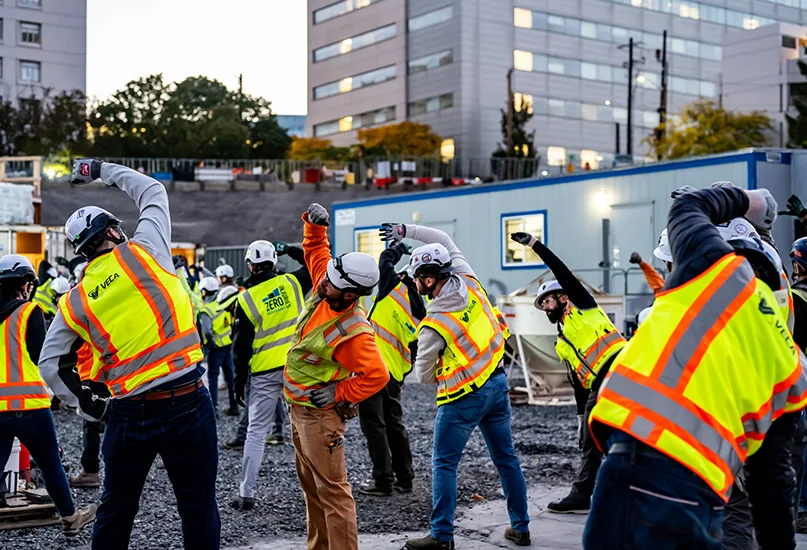
Safety is foundational to that culture and remains VECA’s number one priority across every part of the business.
“It’s not just a program – it’s how we operate day to day, from preconstruction planning to field execution,” states Chapman.
“Our current experience modification rate (EMR) of 0.35 reflects that commitment and the discipline of our teams in consistently doing the right things the right way. We believe when our people go home safe every day, everything else we do is stronger as a result.”
Equally important is the company’s commitment to making its values – empowering each other to succeed, creating value for customers, and accountability, appreciation, and abundance – tangible.
“Our values need to be more than just words on a wall and reflected in how we work every day. Our Executive Chairman often says we need to ensure “the water gets to the end of the row”, meaning our values must be understood and lived at every level of the organization, from the CEO to our newest hire,” Rannow maintains.
To achieve this, VECA recognizes the importance of aligning its daily practices with its core beliefs.
“This year, under the leadership of our CEO, Dave Reed, we launched an initiative focused on ‘making our values tangible’, where each department is actively defining and demonstrating what those values look like in action in their day-to-day work.
“Growth is important, but not at the expense of our identity or how we deliver,” Rannow concludes, emphasizing the significance of integrity in VECA’s journey and the need to uphold its legacy.
This company profile was produced by the editorial team at North America Outlook, a publication within the Outlook Publishing global network of B2B industry magazines.
Outlook Publishing showcases organisations and leadership teams shaping sectors including manufacturing, mining, construction, healthcare, supply chains, food production, and sustainability.
North America Outlook highlights organisations driving innovation and industry leadership across North America.