




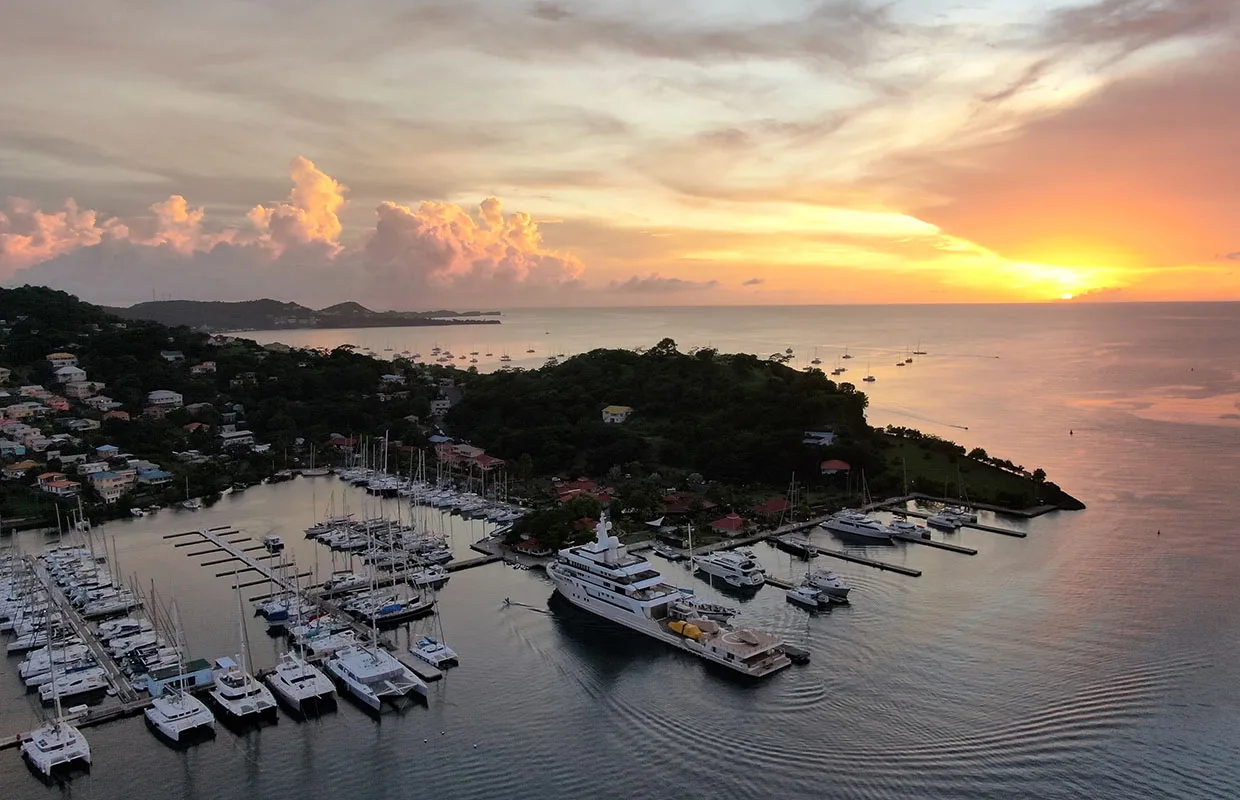
Though it’s often overlooked as just a fun-in-the-sun destination, the ‘Spice Isle’ of Grenada is brimming with potential as an idyllic investment destination.
SPOTLIGHT ON GRENADA INVESTMENT
With a range of trade and investment opportunities, coupled with supportive government policies for doing business and a plethora of attractive fiscal incentives, investing in Grenada has never been more appealing.
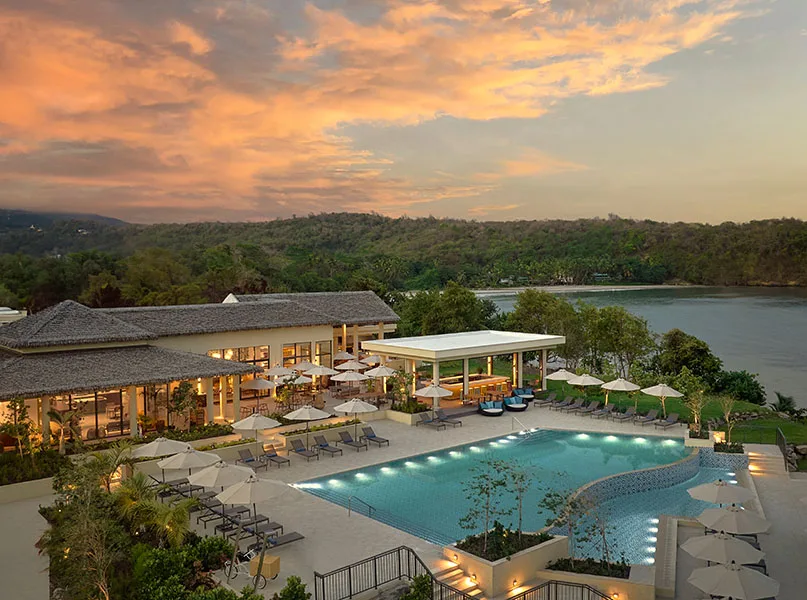
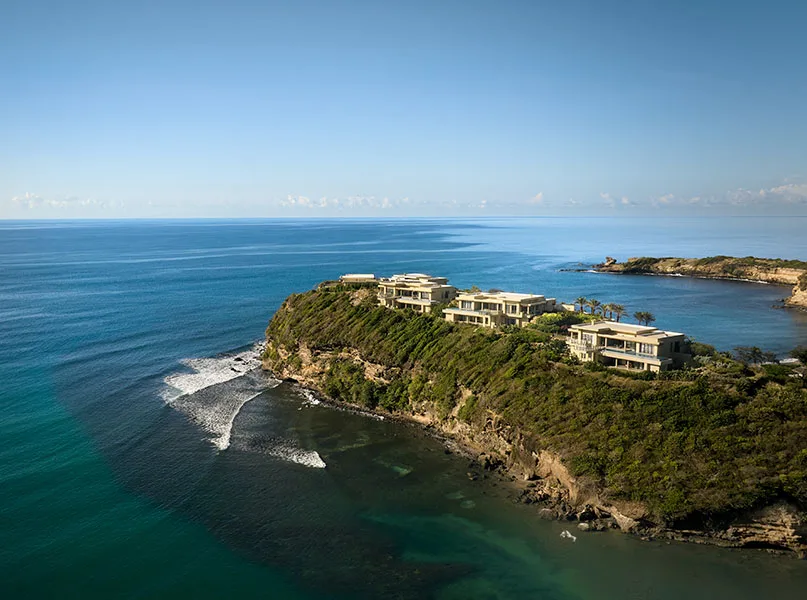
Widely known as the ‘Spice Isle’, Grenada is a lush Caribbean destination celebrated for its rich volcanic soil and abundant production of nutmeg, cinnamon, and cocoa. It pairs vibrant, spice-infused culture, world-class beaches, and ecotourism with its growth as a burgeoning investment paradise.
The State of Grenada consists of three islands – Grenada, Carriacou, and Petite Martinique – which form the southern end of the Windward Islands.
Formerly colonized by the French and then by the British, Grenada still retains traces of these European influences in its culture, architecture, and place names. The capital, St. George’s, is located on the southwest coast and is the seat of government as well as the main commercial center.
Today, Grenada’s economy is relatively diversified, with several sectors making tangible contributions to GDP annually. In the past, agriculture was the dominant sector and main foreign exchange earner for the country.
However, the economy has now shifted to being more service based, with tourism, construction, transport, and private education now standing as the leading contributors to GDP.
Grenada welcomes investments in all fields of lawful economic activity. The nation’s focus, however, centers around five key sectors that have been designated as a priority – agribusiness and manufacturing, tourism and hospitality services, ICT services, energy, and health and wellness.
In addition, there is a growing focus on investment in creative industries.
Q&A WITH RONALD THEODORE, CEO, GRENADA INVESTMENT DEVELOPMENT CORPORATION
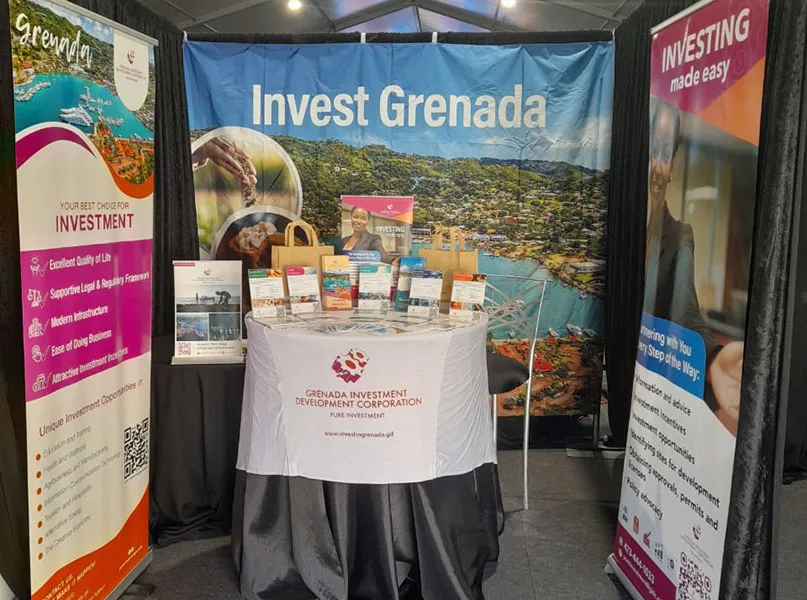
Nurturing entrepreneurial culture and facilitating start-up growth since 1985, Grenada Investment Development Corporation (GIDC) is a statutory body established by the Government of Grenada to stimulate, facilitate, and encourage the establishment and development of industry. We catch up with CEO, Ronald Theodore.
Firstly, could you update us on GIDC’s progress since we last spoke in 2025?
Ronald Theodore, CEO (RT): As an economic development agency, we are involved not only in investment promotion, but also business development and the management of our industrial parks and facilities.
Through these three parks, we continue to serve as landlord to several tenants and rent space to prospective investors who want to operate within them. This continues to be one of our major revenue generators as we continue to provide services through our three strategic business units – investment promotion, facilities, and business development.
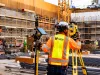
In terms of what has happened since last year, time has moved quickly. In the facilities area, we have continued work on a 40,000-square-foot building designed to provide additional space for tenants within the Frequente Industrial Park.
The building is approximately 99 percent complete, with only a few finishing touches remaining. We already have several tenants earmarked for the space, although some vacancies remain. This has been one of our major accomplishments entering 2026, and we hope that by the final quarter of the year the building will be fully operational with tenants in place.
Regarding investment promotion, the environment for attracting foreign direct investment (FDI) is highly competitive. The Caribbean islands, China, North America, and Central America are all competing for investment, so attracting FDI to our respective destinations remains a significant challenge.
We are very aware of the impact FDI can have on Grenada, and we recognize that we cannot simply stand on a platform and invite people to invest in the country. We’ve had to change our approach.
Can you describe this fresh approach?
RT: That shift began two years ago and continued through 2025 into this year. Our focus now is on developing bankable investment opportunities for projects that we consider vital to Grenada.
By bankable projects, I mean clearly defined opportunities that set out the nature of the project, investment required, expected return on investment (ROI), and overall viability of the proposal. These profiles allow us to target potential investors with specific projects.
For example, we are now preparing for a mission involving a group of investors from Canada and India. They will have already seen the project profiles we have developed, so their visit will be more focused. Rather than arriving with a general interest in Grenada, they will be coming to examine specific opportunities and hold detailed discussions around them.
These projects include both greenfield and brownfield opportunities, and each outlines the investment required, potential ROI, and viability of the project itself.
This is an ongoing process rather than a one-off exercise. We are continuously developing more opportunity profiles across various sectors, including public-private partnership (PPP) arrangements.
Another new and important investment opportunity is Project Polaris – a state-of-the-art hospital. The government has secured 84 acres of land for its development, and the project encompasses not only the hospital itself, but also surrounding investment opportunities such as accommodation, treatment facilities, diagnostic centers, and related services.
GIDC will play an active role in promoting these investment opportunities to potential investors.
How are you striving to create a more streamlined investor experience?
RT: One of our key areas of focus in 2026 is to strengthen facilitation networks. GIDC is not the only organization involved in investment promotion and generation on island; there are around 19 different stakeholders, including the Inland Revenue Department, Grenada Customs and Excise Division, Physical Planning Division, immigration, and other government agencies. Each has an important role to play, and it is critical that we work together seamlessly.
At present, we do not have a physical one-stop shop where all relevant offices are located in one location. Instead, the agencies involved operate from different locations. This makes it even more important to ensure that investors experience a smooth and coordinated process.
We believe a virtual one-stop shop could be critical, with each organization within the investment generation system working together to deliver a positive investor experience.

“The legacy I would like to leave is that whenever conversations take place around investment or investment promotion, generation, and business support, our name comes to the fore.”
Ronald Theodore, CEO, Grenada Investment Development Corporation
What are you most proud of in relation to the corporation’s work so far?
RT: What makes us most proud is the level of recognition we receive from investors and clients who utilize our services. It is always gratifying to hear someone say they came to GIDC and were genuinely pleased with the service they received. That kind of feedback is very encouraging.
We are a small team, and like most investment promotion agencies, we operate with limited budgets, but we are still trying to be as effective as possible in what we do. At the end of the day, hearing positive feedback from investors makes the effort worthwhile.
What is the legacy you are striving toward in terms of the corporation’s reputation and the impact you would like to make?
RT: I see GIDC as the key institution in Grenada when it comes to investment promotion and facilitation. The legacy I would like to leave is that whenever conversations take place around investment or investment promotion, generation, and business support, our name comes to the fore.
We strive to be recognized as an organization that is effective at what it does. At the end of the day, we want investors to have a positive experience investing in Grenada and them to be facilitated effectively, served well, and supported in removing any barriers or obstacles that may arise.
There will always be challenges when someone is making an investment, but we want to stand out as the conduit that helps investors navigate those challenges and invest successfully in their chosen sectors. We also do not want that investment to be a one-off experience. The aim is to encourage further expansion, reinvestment, and diversification of investments in other areas.
Ultimately, we want to ensure GIDC continues to play a critical role in Grenada’s investment generation system.
“In terms of business development, we will continue to work closely with SMEs because we believe they play a critical role in Grenada’s economy”
Ronald Theodore, CEO, Grenada Investment Development Corporation
Finally, looking ahead, what are your key priorities for the future?
RT: Priority number one would be to continue developing a bank of viable investment opportunities. We want to keep working on that effectively because it will play a critical role in our investment generation strategy. By developing bankable opportunities and targeting investors with those specific projects, we can take a more focused and strategic approach.
In terms of business development, we will continue to work closely with small to medium-sized enterprises (SMEs) because we believe they play a critical role in Grenada’s economy. There are also new and emerging industries that we want to give more attention to, including the blue economy, health and wellness, and energy. Elsewhere, in agribusiness, we want to give particular attention to food security and niche areas such as vertical farming and hydroponics.
As we identify these areas as priorities, we must also consider the business environment needed to support them.
Additionally, we are about to embark on a strategic plan for the next three years. The environment is changing, and we can all see what is happening globally. Sometimes it is important to stop, assess the situation, and consider the next move. That means looking at our strengths and weaknesses, examining global trends, and asking how we can make the institution more relevant.
We also need to consider how we can be more strategic in targeting investment, where those investments should come from, how we attract them, and the ways in which we improve the overall business environment. The strategic plan will serve as a roadmap for the corporation over the next three years, so it is a major priority.
This company profile was produced by the editorial team at North America Outlook, a publication within the Outlook Publishing global network of B2B industry magazines.
Outlook Publishing showcases organisations and leadership teams shaping sectors including manufacturing, mining, construction, healthcare, supply chains, food production, and sustainability.
North America Outlook highlights organisations driving innovation and industry leadership across North America.