




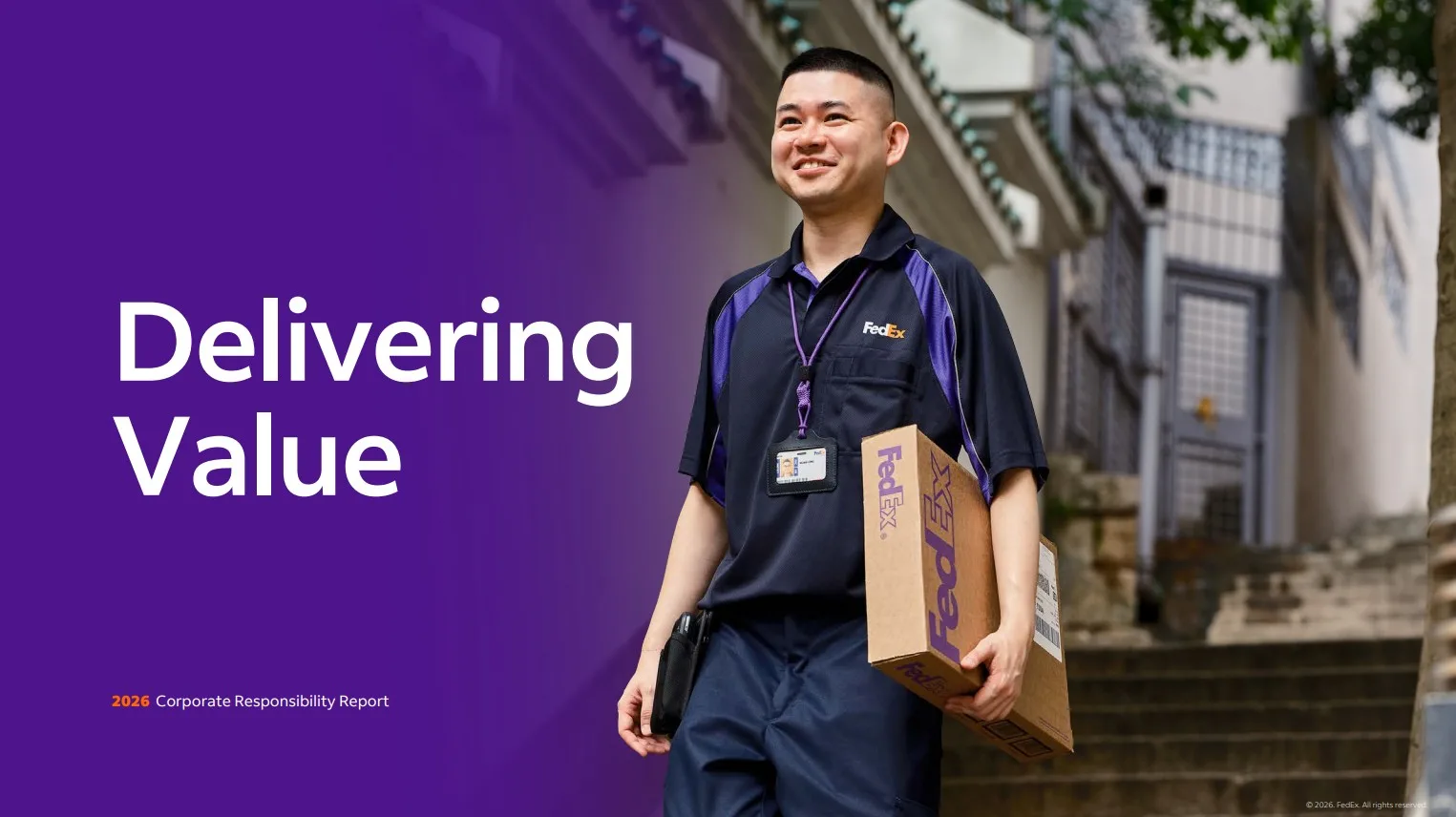
FedEx President and CEO Raj Subramaniam reflects on the new level of innovation required to meet the challenges of tomorrow in the company 2026 Corporate Responsibility Report.
Progression Towards Carbon Neutrality
FedEx says operational efficiency, network optimisation and continued investment in fleet electrification are helping reduce emissions while supporting growing freight volumes, although challenges around sustainable aviation fuel (SAF) and charging infrastructure continue to affect the pace of decarbonisation.
FedEx has reported continued progress towards its 2040 carbon-neutral operations target, with operational efficiencies, network optimisation and technology investment contributing to lower emissions while supporting growth across its global logistics network.
The company’s 2026 Corporate Responsibility Report highlights advances in fleet electrification, renewable energy, artificial intelligence (AI) and network optimisation, alongside ongoing investment in supply chain resilience and operational efficiency.
Network Transformation Drives Efficiency
A key focus of the report is Network 2.0, FedEx’s multiyear programme to streamline package collection, transportation and delivery across its network.
The initiative is reducing operational redundancies, improving asset utilisation and creating a more integrated logistics network while also lowering emissions.
Karen Blanks Ellis, Chief Sustainability Officer and Vice President, Environmental Affairs at FedEx, said: “Efficiency has long defined how FedEx operates. Today, it is driving one of the most significant transformations in our history: Network 2.0.
“This multiyear effort streamlines how we pick up, transport, and deliver packages, reducing redundancies, improving asset utilization, and enabling a more flexible, integrated network. As we implement these changes, we are strengthening business, improving service for our customers, and reducing emissions across our operations.”

Emissions Fall as Global Network Expands
FedEx reported that it has reduced its Scope 1 and 2 emissions intensity on a revenue basis by 60 per cent since 2009 while daily package volumes have increased by more than 124 per cent over the same period.
It has also achieved an approximate 15 per cent reduction in absolute Scope 1 and 2 emissions since announcing its goal of achieving carbon-neutral operations by 2040.
Electric vehicles are now operating across six continents within the FedEx network, while the company continues to invest in renewable energy, more efficient facilities and technology designed to improve operational performance.
Technology and AI Support Supply Chain Performance
Alongside physical infrastructure improvements, FedEx said it is investing in AI education and digital technologies to support both employees and supply chain operations.
Raj Subramaniam, President and Chief Executive Officer of FedEx, said: “The challenges of tomorrow demand a new level of innovation, and we are meeting that demand head on. By leveraging our global network, investing in our people, and embracing cutting-edge technologies, we are not just moving goods — we are making supply chains smarter for everyone and building a more resilient future. Our work continues, and the best is yet to come.”
“In today’s rapidly evolving market, our strategy is clear: We are delivering for today while preparing for a resilient tomorrow.”
The report also highlights continued work to integrate data and technology across the company’s logistics network to optimise routing, reduce fuel consumption and improve overall system performance.

Decarbonisation Challenges Remain
Despite reporting progress, FedEx said several external factors continue to affect the pace of its decarbonisation strategy.
According to the report, limited supplies of sustainable aviation fuel (SAF), changing electric vehicle market conditions, charging infrastructure constraints and an evolving regulatory environment are influencing the company’s near-term progress.
Blanks Ellis said: “While we are proud of our progress, this work is not without its challenges. The technologies and infrastructure required to fully transform our operations — particularly sustainable aviation fuel (SAF) and fleet electrification — are not advancing at the pace or scale needed.
“Constraints in SAF supply, shifts in the electric vehicle market, challenges associated with charging infrastructure, and a rapidly evolving regulatory landscape continue to shape what we can achieve in the near term. In response to this rapidly evolving landscape, we are adapting our approach where needed to ensure our strategy remains grounded in reality while continuing to advance our long-term objectives.”
Long-Term Sustainability Strategy
FedEx said its sustainability strategy is built around three pillars: principles, planet and people.
Key environmental initiatives include fleet electrification, renewable energy deployment and investments in more efficient facilities, while longer-term innovation continues through its work with the Yale Center for Natural Carbon Capture, which has now reached five years of carbon removal research.
“Our efforts to deliver a more sustainable future are making a difference. Five years ago, we set an ambitious goal to achieve carbon-neutral operations by 2040. I am incredibly proud to report that we have made significant strides on this journey.
To date, we have achieved an approximate 15% reduction in Scope 1 and 2 emissions, a testament to the hard work and ingenuity of our team. From electrifying our vehicle fleet to investing in renewable energy and more efficient facilities, we are delivering on our promise to create a more sustainable network for everyone,” added Subramaniam.
This article was produced by the editorial team at North America Outlook and published as part of the Outlook Publishing global network of B2B industry magazines.
Outlook Publishing delivers industry insights, company stories, and sector coverage across manufacturing, mining, construction, healthcare, supply chains, food production, and sustainability.
North America Outlook provides ongoing coverage of organisations and developments shaping industries across North America.