



Amazon says it is continuing to reduce the environmental impact of its operations while expanding AI infrastructure, highlighting progress in renewable energy, water efficiency, electric transportation and supply chain decarbonisation in its 2025 Sustainability Report.
Amazon’s key report takeaways
- Amazon is shipping packages with less waste, less packaging, and fewer emissions
- Amazon is expanding its low- and zero-emission delivery
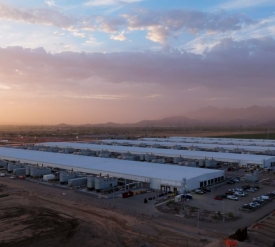
- Amazon is building data centres that do more with less
- Amazon is collaborating with suppliers to help reduce supply chain emissions
- The Climate Pledge is driving collective action at scale
AI growth drives renewed focus on sustainability
Amazon has released its 2025 Sustainability Report, outlining progress across renewable energy, water stewardship, low-carbon logistics and supply chain decarbonisation as the company continues to expand its global operations.
The report highlights a 7 per cent reduction in carbon emissions per shipped unit during 2025, while Amazon also reported that its data centres are now seven times more water efficient than the industry average. The company said it has also reached more than halfway towards its goal of deploying 100,000 electric delivery vehicles globally by 2030.
Amazon added that, although its absolute carbon emissions increased during 2025, its carbon intensity has fallen by 38 per cent since 2019 while revenue has grown by 156 per cent.
Investment in energy and water efficiency continues
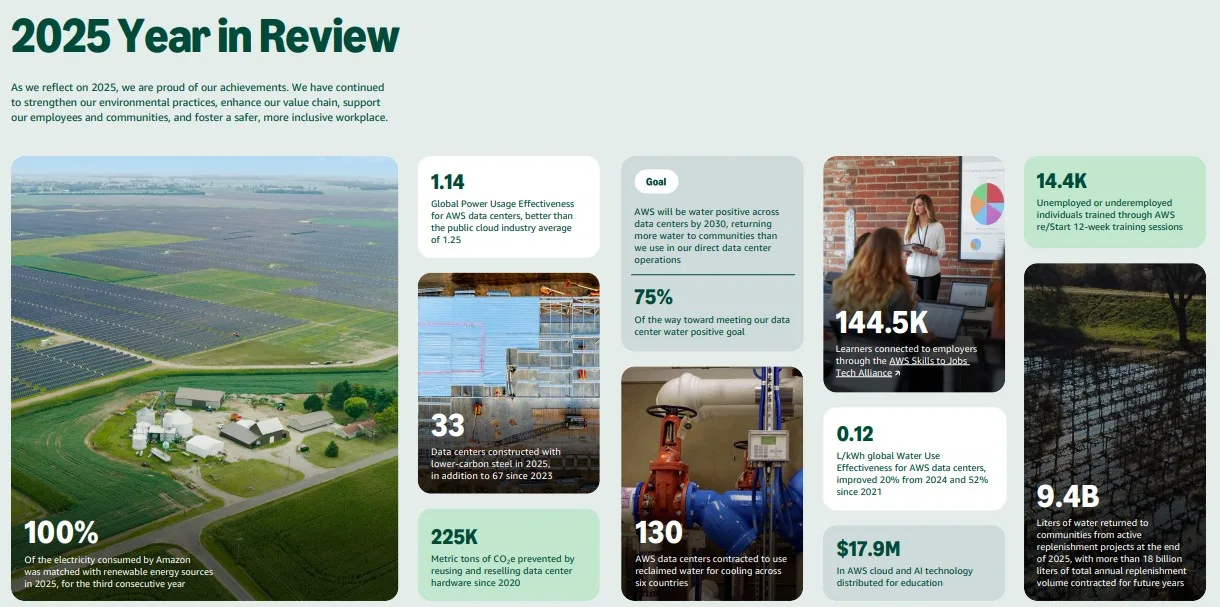
The report outlines continued investment in renewable energy and data centre efficiency to support growing demand for cloud computing and artificial intelligence (AI).
Amazon said its renewable energy portfolio now includes more than 712 projects across 30 countries, representing 42 GW of capacity. The company also reported a global average Power Usage Effectiveness (PUE) of 1.14 across its data centres and said it has reached 75 per cent of the way towards its goal of becoming water positive by 2030.
In 2025, Amazon announced more than 50 water projects expected to replenish more than 5.8 billion gallons annually once fully implemented, while 26 data centres now use reclaimed water for cooling.
Electrification and packaging initiatives gather pace
Amazon also reported progress in reducing emissions across its logistics network.
The company now operates more than 52,700 electric delivery vans globally, delivering 2.4 billion packages using electric vehicles during 2025. Across Europe, 75 micromobility hubs use electric cargo bikes, pushcarts and other zero-exhaust-emission vehicles for deliveries.
Packaging initiatives also continued during the year. Amazon said it retrofitted automated packaging machines with paper-based alternatives, avoiding more than 288 million single-use plastic bags in North America. Recyclable packaging increased to 73 per cent of all packaging in North America, up from 63 per cent a year earlier.
The company added that Amazon Day deliveries, consolidated shipments and improved inventory placement helped avoid nearly 500 million delivery trips and 127 million vehicle miles during 2025.
Supply chain collaboration remains a priority
Amazon said more than two-thirds of its emissions come from its supply chain, making supplier engagement a key focus of its climate strategy.
According to the report, 62 per cent of its top suppliers now have credible decarbonisation plans in place, a 23 per cent increase year over year. The company said it is supporting suppliers through coaching, procurement training and access to power purchase agreements.
Amazon also highlighted continued growth of The Climate Pledge, which reached 656 signatories across 62 industries and 49 countries by the end of 2025.

Sustainability strategy evolves alongside AI
In a letter accompanying the report, Kara Hurst, Chief Sustainability Officer at Amazon, said the rapid growth of AI is reshaping both the company’s operations and its sustainability strategy.
Hurst said: “Perhaps none bigger than AI, which is both transforming what’s possible—accelerating discovery, optimizing systems, and unlocking solutions that weren’t within reach before—yet also creating new demands for energy, water, and infrastructure.”
She added: “While the speed and scale of AI adoption is unique—and the change is happening faster and more broadly than anything else we’ve encountered in our lifetimes—the need to stay stubborn on our vision and flexible on the details is familiar territory.”
Reflecting on Amazon’s environmental investments, Hurst said: “These things don’t happen overnight, but I’m proud of where we are and we’re pushing to go faster.”
Looking ahead, Hurst reaffirmed the company’s long-term sustainability ambitions.
She said: “The path forward isn’t always straight, but the vision is clear and so is our resolve to get there.”
This article was produced by the editorial team at North America Outlook and published as part of the Outlook Publishing global network of B2B industry magazines.
Outlook Publishing delivers industry insights, company stories, and sector coverage across manufacturing, mining, construction, healthcare, supply chains, food production, and sustainability.
North America Outlook provides ongoing coverage of organisations and developments shaping industries across North America.