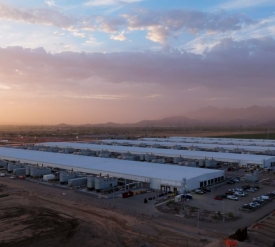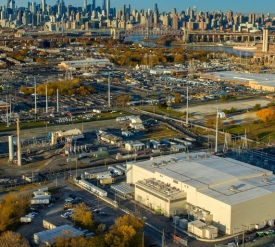




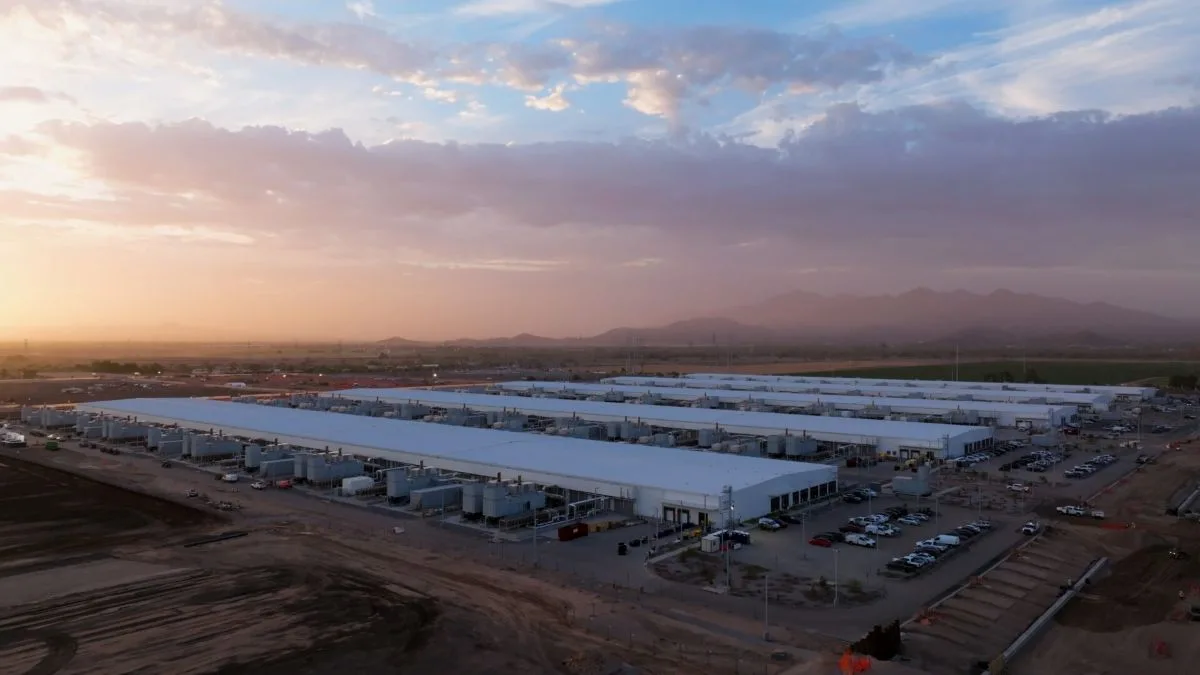
Expanding its global datacenter capacity by approximately two gigawatts, Microsoft has announced plans to create one of the largest single capacity additions in the company’s history.
BUILDING RELIABLE INFRASTRUCTURE
In an ongoing effort to meet strong and sustained customer demand for artificial intelligence (AI) and cloud services across industries and regions, global technology titan Microsoft has announced plans to build a new datacenter campus in Pecos, Texas.
Projected to be completed within the next five to seven years, the multibillion-dollar infrastructure highlights the immediate needs the company is responding to today, and the future trajectory of AI. Reliable infrastructure at scale is essential to unlocking the next generation of innovation, and that is precisely what Microsoft is putting at the forefront with this new datacenter.

Writing in a new blog post, Noelle Walsh, President, Cloud Operations and Innovation at Microsoft, said, “This expansion is grounded in a simple principle: we build where our customers need us, and we build for the long term. We have a track record of doing exactly that in Texas. In the San Antonio region, where we have operated datacenters for nearly a decade, our investment has generated billions of dollars in local economic activity and supported thousands of local jobs. We are committed to delivering the same lasting value in Pecos.”
In addition to the new technological possibilities, the company expects to support more than 6,000 construction jobs at peak build-out and to create hundreds of permanent operational jobs that will add a new industry to support the local economy when the new datacenter campus is operational.
Ultimately, Microsoft is meeting the increasing demand for AI and cloud services through capacity that is predictable, resilient, and able to scale quickly.
INNOVATION FOR THE FUTURE
The pairing of the new Pecos datacenter infrastructure with Microsoft’s dedicated onsite energy supply allows the company to bring capacity online at customers’ desired pace, while still maintaining operational reliability.
The energy infrastructure necessary to power the campus is being funded entirely by Microsoft, with the company paying for the new generation and supporting infrastructure needed to serve its own operations.
“The capacity we bring online in Pecos is built to meet our demand, ensuring that our growth strengthens, rather than strains, the energy resources the community relies on,” notes Walsh.
The datacenter in West Texas marks a crucial step forward for Microsoft in how the company builds infrastructure for the inevitable AI era through the combination of capacity at scale, energy, and a commitment to responsible and collaborative growth.
“But just as importantly, it reflects how we do this work: in partnership with communities, with an enduring mindset, and with a focus on creating shared value. As we move forward, we will continue to engage closely with the community in West Texas, provide updates on our progress, and ensure that this investment delivers lasting benefits for both our customers and our neighbours. We look forward to building that future together,” concludes Walsh.
As Microsoft continues to expand its datacenter footprint, the company remains committed to building and operating infrastructure in a way that reduces environmental impact and supports local communities while contributing to a sustainable, responsible future.
This article was produced by the editorial team at North America Outlook and published as part of the Outlook Publishing global network of B2B industry magazines.
Outlook Publishing delivers industry insights, company stories, and sector coverage across manufacturing, mining, construction, healthcare, supply chains, food production, and sustainability.
North America Outlook provides ongoing coverage of organisations and developments shaping industries across North America.