New Mastercard research shows resale, repair and rental models are gaining traction globally as consumers seek affordability, durability and products that align with their values—creating new opportunities for businesses advancing circular economy strategies.
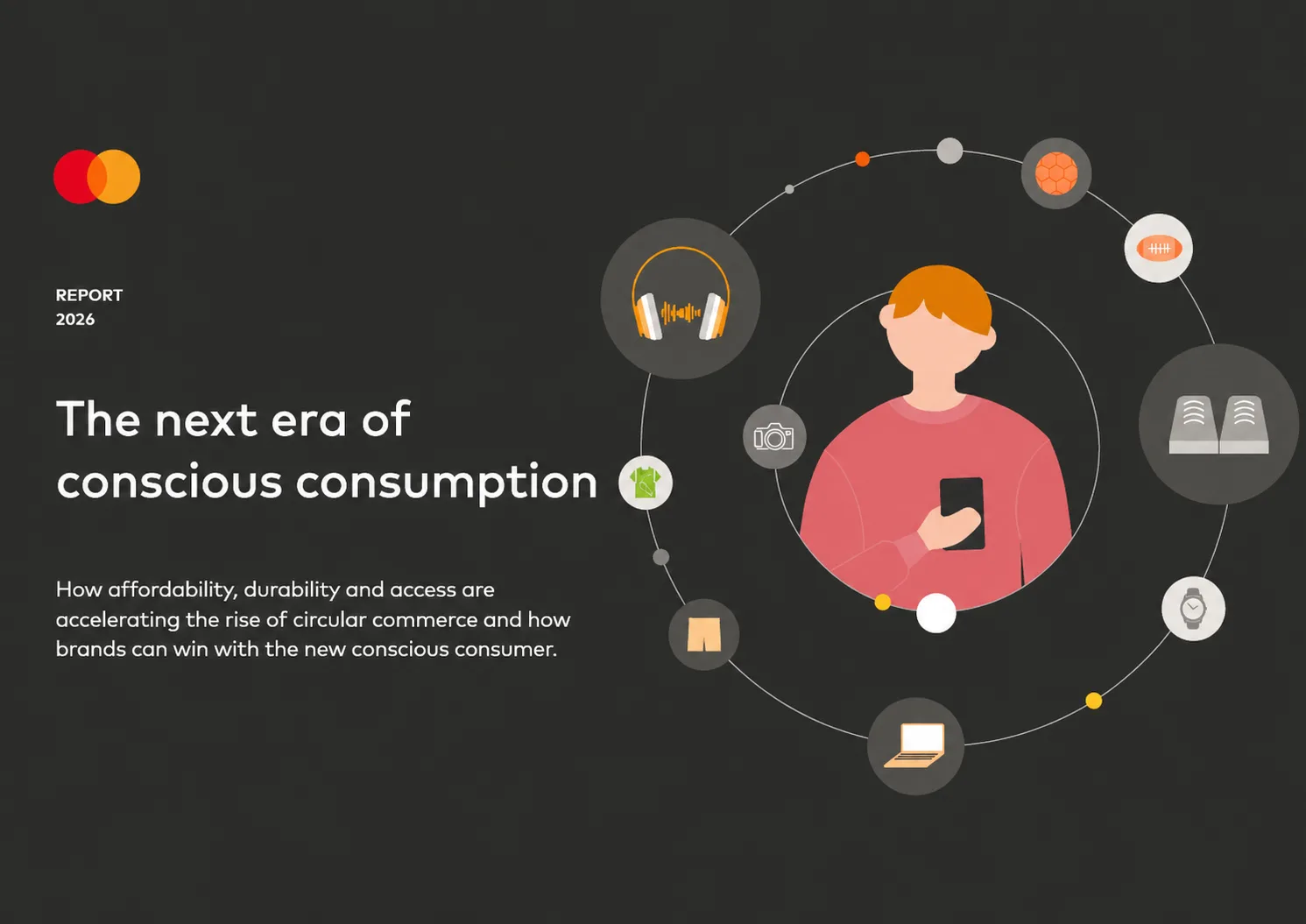
Circular economy business models are moving from the margins to the mainstream, according to Mastercard’s latest report, The Next Era of Conscious Consumption.
The research reveals that consumers increasingly view sustainability and affordability as complementary rather than competing priorities. While cost, product longevity and brand trust remain the top purchasing drivers, more than half of consumers say they are willing to pay more for products that align with their values. That figure rises to more than 60% among Gen Z and Millennial consumers.
Mastercard: Sustainable Consumption Is Becoming Mainstream
As Ellen Jackowski, Chief Sustainability Officer at Mastercard, explained:
“Sustainable living may have taken root among the environmentally conscious, but today it’s gaining momentum by delivering tangible value everyone can feel, from saving money to accessing better, more durable goods and supporting personal health and well-being. Circular purchasing behaviours are becoming more mainstream for everyday consumers because the tools and infrastructure to inspire, inform and enable them are finally emerging.”
“At Mastercard, we see this transformation from a unique vantage point. We sit at the center of the global economy, connecting 150 million+ acceptance points and hundreds of millions of digital access points, thousands of banking partners, and 3.7 billion cards in circulation. That position gives us both responsibility and opportunity: to help turn intention into action, and to make the infrastructure of commerce work in service of a more sustainable future.”
The report highlights growing demand for circular commerce models, with resale, rental, repair and reuse becoming increasingly common purchasing behaviours.
Mastercard Economics Institute data shows second-hand clothing sales grew 28% year-over-year in 2025 across leading circular commerce markets, significantly outpacing traditional retail growth. Rental models are also gaining popularity among younger consumers, while repair continues to emerge as a key pillar of sustainable consumption.
71% of consumers say they would rather repair products they already own than replace them with new purchases.
The findings point to a growing opportunity to align sustainability strategies with customer value propositions.
As consumers seek products and services that reduce costs while supporting more responsible consumption, circular business models are increasingly becoming both a sustainability initiative and a commercial growth opportunity.
The report suggests companies that can combine affordability, quality, durability and environmental performance will be best positioned to capture changing consumer demand.
Mastercard argues that scaling circular commerce will depend on stronger supporting infrastructure, including digital payments, sustainability data, rewards programs and tools that help consumers understand the environmental impact of their purchasing decisions.
The company highlighted initiatives such as carbon footprint tracking, sustainable rewards programmes and digital solutions that make lower-impact purchasing choices easier and more accessible.
“The data behind this report points to a steady shift in how people are spending,” said Michelle Meyer, Chief Economist, at Mastercard Economics Institute.
“Circular commerce is showing up more often across categories and markets, not as a one-off trend, but as part of everyday consumer behaviour. At the Mastercard Economics Institute, we look at aggregated and anonymised spending data to understand how these changes take shape over time.
What we see is practical: as people stay focused on cost, they are finding ways to get more value out of what they buy — whether through resale, rental or repair — and those options are becoming easier to access. For businesses, this changes the growth model.
Products and services that support longer use and offer consumers greater choice are becoming a more consistent part of the market, shaping how companies think about demand, inventory and customer relationships. Seen through the data, circular commerce reflects a lasting shift in how people define value and how commerce will continue to evolve.”