



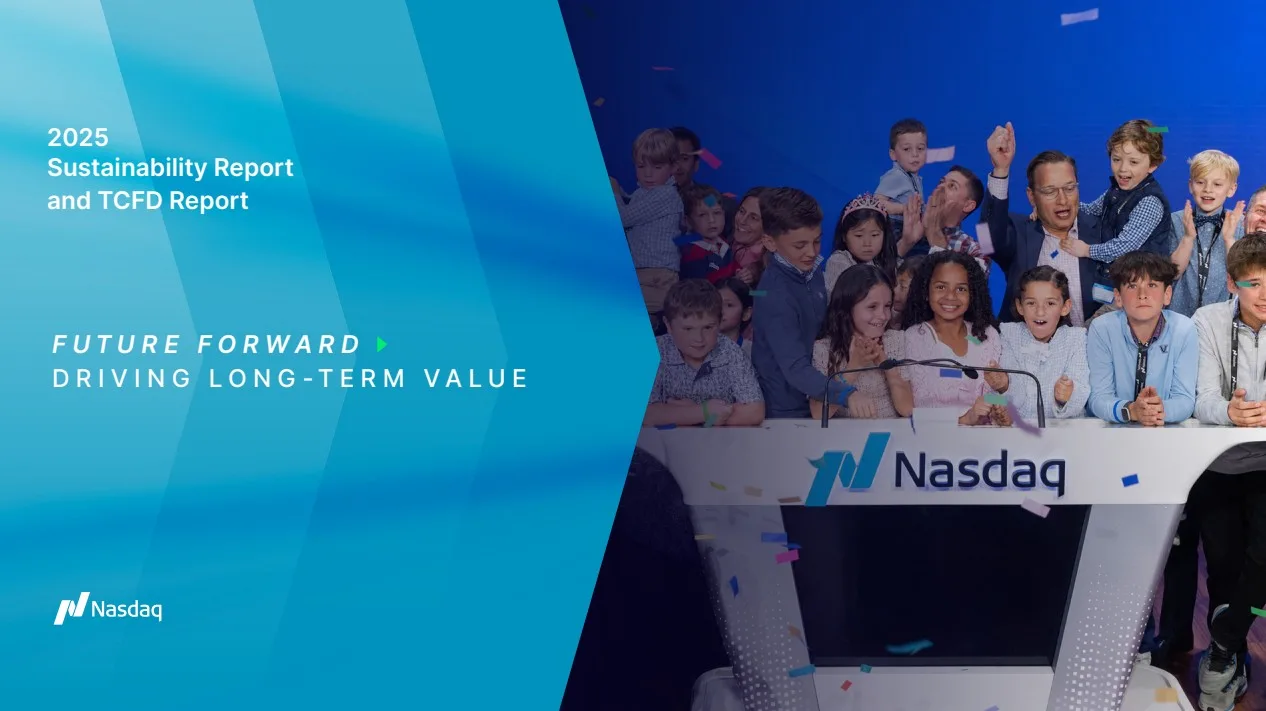
Nasdaq’s latest Sustainability Report highlights how the exchange operator is combining climate action, AI governance and operational resilience to support long-term value creation. As sustainability expectations evolve, the company is positioning responsible innovation as a core component of modern financial market infrastructure.
- Nasdaq links sustainability and resilience in evolving financial markets
- Responsible innovation becomes a strategic priority
- AI governance moves to the forefront
- Managing the environmental impact of AI growth
- Climate resilience remains central to sustainability strategy
- Building trust through sustainable market infrastructure
Nasdaq links sustainability and resilience in evolving financial markets
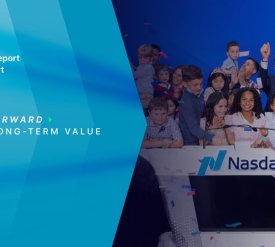
Nasdaq has published its 2025 Sustainability Report, outlining progress across environmental stewardship, responsible technology deployment, governance and workforce development as the company seeks to strengthen resilience across the global financial system.
The report centres on what Nasdaq describes as a “Future Forward” approach, aligning business strategy with the technological, environmental and economic forces reshaping capital markets while supporting long-term stakeholder value.
As sustainability becomes increasingly intertwined with risk management and corporate performance, the report highlights how Nasdaq is integrating climate considerations and responsible innovation into its role as a technology provider for global financial markets.
Responsible innovation becomes a strategic priority
A key theme throughout the report is the growing importance of responsible technology deployment, particularly as artificial intelligence becomes more deeply embedded across financial services.
Nasdaq says it is taking a deliberate approach to AI adoption, balancing innovation with governance, accountability and environmental considerations.
In the report, Adena Friedman, Chair and CEO of Nasdaq, said:
“As a leading technology platform powering the world’s economies, Nasdaq’s focus is on serving as the trusted fabric of the financial system. That means we are Future Forward – architecting the world’s modern markets, powering the innovation economy, and building trust in the financial system.”
“This past year reinforced our conviction that innovation is not about reacting to disruption, but about designing durable solutions the global financial system can depend on over time.”

AI governance moves to the forefront
The report highlights Nasdaq’s efforts to establish governance frameworks around AI deployment as organisations increasingly seek to balance productivity gains with responsible implementation.
Sarah Youngwood, Executive Vice President and Chief Financial Officer at Nasdaq, wrote:
“Responsible innovation has always been part of how we think about technology at Nasdaq, and AI is no different.”
To support this approach, Nasdaq has established a dedicated AI Integration Team and expects employees to receive role-specific training focused on ethical AI use.
These measures are designed to create shared accountability while ensuring AI deployment remains aligned with the company’s values and risk management framework and the focus on governance reflects a growing trend among organisations seeking to operationalise responsible AI principles rather than treating them solely as policy commitments.
Managing the environmental impact of AI growth
The sustainability report also addresses a challenge increasingly facing technology-intensive organisations: the environmental implications of expanding AI adoption.
Youngwood noted that Nasdaq is seeking to understand and manage AI-related environmental impacts while maintaining its broader climate commitments.
The company’s approach includes:
- Procuring 100% renewable electricity across operations
- Encouraging employees to use appropriately sized AI models for specific tasks
- Engaging cloud and technology suppliers on energy efficiency
- Working with suppliers to promote responsible water use
As demand for AI infrastructure continues to grow, sustainability leaders are placing increasing attention on the energy consumption and resource requirements associated with emerging technologies.
Nasdaq’s approach signals a recognition that AI governance must encompass environmental as well as ethical and operational considerations.
Climate resilience remains central to sustainability strategy
Alongside its technology agenda, Nasdaq continues to position climate resilience as a core element of long-term business strategy.
According to the report, the company’s climate approach focuses on:
- Reducing greenhouse gas emissions
- Improving energy efficiency
- Maintaining carbon neutrality
- Managing climate-related risks
- Strengthening long-term operational resilience
This reflects a wider shift across financial services, where climate risk is increasingly viewed through the lens of business continuity, infrastructure resilience and long-term value protection.
Rather than treating sustainability as a standalone initiative, organisations are increasingly embedding climate considerations into enterprise risk management and strategic planning.
Building trust through sustainable market infrastructure
As capital markets increasingly rely on digital infrastructure and AI-enabled capabilities, expectations around transparency, governance and environmental responsibility continue to rise.
Friedman emphasised the importance of making long-term investments that strengthen both sustainability and resilience:
“As we look ahead, our commitment remains clear: to advance sustainable growth, deliver transparent, measurable impact, and create long-term value that endures beyond the next cycle.”
This article was produced by the editorial team at North America Outlook and published as part of the Outlook Publishing global network of B2B industry magazines.
Outlook Publishing delivers industry insights, company stories, and sector coverage across manufacturing, mining, construction, healthcare, supply chains, food production, and sustainability.
North America Outlook provides ongoing coverage of organisations and developments shaping industries across North America.