




Google’s latest Environmental Report highlights record investment in clean energy, lower operational emissions and growing use of artificial intelligence (AI) to reduce carbon emissions, while acknowledging the challenges of scaling AI infrastructure alongside climate ambitions.
Clean energy investment reaches new milestone
Google signed agreements for more than 12 GW of net-new clean energy during 2025, according to its 11th annual Environmental Report, as the company continues to expand its AI infrastructure while pursuing long-term sustainability goals.
The company said the new agreements are roughly enough to power a country the size of Greece for a year once operational. During the same period, Google reduced its operational emissions by 2 per cent despite a significant increase in electricity demand.
Kate Brandt, Chief Sustainability Officer at Google, said: “Our report navigates the tension between hyper-growth and environmental stewardship, and proves our enduring commitment to a more sustainable future.”
“While the path to achieving our climate ambitions will not be linear — given our AI infrastructure buildout is currently accelerating faster than the grid is decarbonising — we remain focused on scaling abundant and affordable clean power globally and progressing technological innovations that drive down emissions across our operations and the broader industry.”
Balancing AI growth with lower emissions
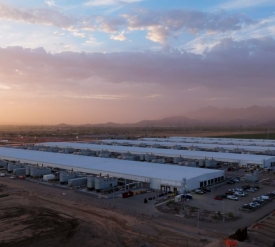
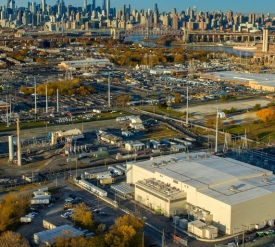
The report outlines how Google’s AI expansion is increasing demand for electricity, while also highlighting the company’s investments in clean energy, energy efficiency and emerging technologies.
Between 2010 and 2025, Google signed more than 240 agreements to purchase nearly 35 GW of net-new clean energy. The company also matched 100 per cent of its electricity consumption with renewable energy purchases for the ninth consecutive year.
Despite experiencing a 37 per cent annual increase in electricity demand, Google said advances in hardware, software, compute efficiency and clean energy procurement collectively avoided more than 58 million metric tons of carbon dioxide equivalent (tCO2e) during 2025.
Brandt said: “While the path to achieving our climate ambitions will not be linear — given our AI infrastructure buildout is currently accelerating faster than the grid is decarbonising — we remain focused on scaling abundant and affordable clean power globally and progressing technological innovations that drive down emissions across our operations and the broader industry.”
AI supports wider sustainability outcomes
Beyond reducing the environmental impact of its own operations, Google said AI is helping customers and communities lower emissions and respond to environmental challenges.
According to the report, nine Google solutions enabled individuals, cities and partners to collectively reduce an estimated 41 million tCO2e during 2025. The company highlighted applications including Google Earth for renewable energy planning, Nest thermostats for home energy efficiency, and fuel-efficient routing in Google Maps.
The report also outlines how AI is supporting forecasting and early detection of wildfires, floods, earthquakes and extreme weather, alongside biodiversity tools such as Perch and SpeciesNet.
Brandt said: “We see — and are actively seizing — a huge opportunity for AI to help drive progress on environmental issues specifically.”
Supply chain challenges remain
While operational emissions declined, Google reported that supply chain emissions increased by 25 per cent year over year, reflecting continued investment in AI infrastructure and the carbon intensity of parts of its Asia-Pacific supply chain.
The company said grid connection delays, fragmented energy markets, supply chain constraints and regulatory hurdles continue to slow the deployment of new carbon-free energy capacity.
Despite these challenges, Google said it remains committed to balancing AI growth with environmental performance through continued investment in clean energy, efficiency improvements and innovation.
Brandt said: “We continue to evolve our approach in tandem with the technology we build, regularly assessing our strategy as we move forward with steady execution, balancing our bold climate ambition with real-world impact. We’ll continue to prioritise AI stack efficiencies, clean energy, and innovation to ensure our efforts make use of the transformative potential of AI to enhance lives globally.”
This article was produced by the editorial team at North America Outlook and published as part of the Outlook Publishing global network of B2B industry magazines.
Outlook Publishing delivers industry insights, company stories, and sector coverage across manufacturing, mining, construction, healthcare, supply chains, food production, and sustainability.
North America Outlook provides ongoing coverage of organisations and developments shaping industries across North America.