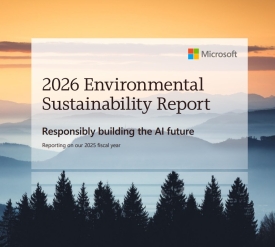




Microsoft has published its 2026 Environmental Sustainability Report, outlining progress against its 2030 environmental commitments while acknowledging the growing demands that artificial intelligence (AI) infrastructure is placing on energy, water, land and materials.
- AI growth drives a new phase of sustainability
- “An important shift in how we think about sustainability“
- Four Key Levers to Advance Microsoft’s Sustainability Progress
- Carbon Emissions Rise as Infrastructure Expands
- Water Stewardship Reaches a Milestone
- Circularity Remains a Key Focus
- Building Sustainable AI infrastructure
AI growth drives a new phase of sustainability
The report highlights advances across renewable energy, water stewardship, circularity and waste reduction, while also reporting higher emissions as the company continues to expand its global AI and cloud infrastructure.
The rapid growth of AI is reshaping both its business and its sustainability strategy. Rather than treating sustainability as a separate initiative, the company said it is increasingly embedding environmental performance into how AI infrastructure is designed, built and operated.
Microsoft believes AI can deliver broad economic, societal and environmental benefits, but says innovation must be matched by responsible stewardship of natural resources and local communities. The company added that responsible growth requires greater operational discipline, transparency and collaboration across its value chain.
“An important shift in how we think about sustainability“
Melanie Nakagawa, Chief Sustainability Officer at Microsoft, said:
“Since setting our commitments in 2020, the rise of AI is accelerating innovation and creating new opportunities for economic and societal progress—but it is also increasing demand for energy, water, land, and materials. As a company at the forefront of this transition, Microsoft has a responsibility to help ensure that technology strengthens, rather than strains, the systems and communities on which it depends.
This year’s report reflects an important shift in how we think about sustainability: not as a separate objective, but as a core part of how responsible growth is defined. We remain committed to our long-term ambitions while becoming more precise, data-driven, and transparent about what progress requires—and where new approaches are needed.
The report highlights meaningful progress, including replenishing more water globally than we withdrew for the first time, matching 100% of our annual electricity consumption with renewable energy, continuing to scale carbon-free electricity, and advancing circularity across our cloud operations. Just as importantly, it reflects lessons learned about the challenges ahead and the need for deeper integration across our work to advance progress on carbon, water, waste, and ecosystems.
Sustainability outcomes will increasingly depend on our ability to align innovation with stewardship. That means being accountable for the impacts of growth, strengthening partnerships, and staying focused on durable outcomes for communities and the environment.”
Four Key Levers to Advance Microsoft’s Sustainability Progress
- Improving efficiency
Reducing environmental impact at the source by designing infrastructure, products, and operations to use energy, water, land, and materials more efficiently.
- Advancing policy
Engaging with policymakers and industry stakeholders to help create the market conditions that enable sustainability solutions to scale.
- Building markets
Accelerating emerging sustainability solutions by using investment, procurement, and long-term demand to help scale availability.
- Forging partnerships
Engaging with policymakers and industry stakeholders to help create the market conditions that enable sustainability solutions to scale.
Carbon Emissions Rise as Infrastructure Expands
The report says that Microsoft matched 100 per cent of its annual global electricity consumption with renewable energy during FY25 and continues to support the expansion of carbon-free electricity across the grids where it operates.
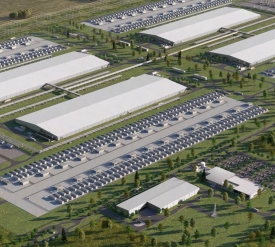
However, total Scope 1, 2 and 3 emissions increased 25 per cent year on year. Microsoft said the increase was driven primarily by continued expansion of its datacentre infrastructure and its decision to pause the use of non-additional, unbundled renewable energy certificates in favour of investments that add new carbon-free electricity capacity to power grids.
This approach increases reported emissions in the short term but is intended to deliver greater long-term sustainability benefits by supporting additional clean energy generation.
Water Stewardship Reaches a Milestone
One of the report’s most significant achievements was Microsoft’s progress towards its water positive commitment.
During FY25, the company replenished more water globally than it withdrew for the first time, exceeding 14 million cubic metres. Microsoft said future efforts will increasingly focus on restoring more water within the same watersheds where it operates, particularly in water-stressed regions, through locally relevant projects developed with community partners.
Circularity Remains a Key Focus
The report also highlights continued progress in circular economy initiatives across Microsoft’s operations.
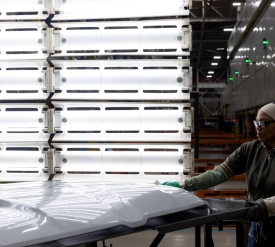
The company said it has eliminated nearly all single-use plastics from its primary product packaging, with just 0.07 per cent remaining at the end of calendar year 2025.
Across its cloud operations, Microsoft reported reusing or recycling 92 per cent of decommissioned servers and components for the second consecutive year, diverting 90.5 per cent of construction and demolition waste from landfill and incineration, and expanding its global network of Circular Centers to seven facilities.
Microsoft said extending hardware life through circular approaches helps reduce both emissions and demand for raw materials across its value chain.
Building Sustainable AI infrastructure
The report concludes that the next phase of Microsoft’s sustainability strategy will depend on integrating carbon, water, waste and ecosystem priorities rather than managing them independently.
The company said responsible AI infrastructure will require more resilient electricity grids, stronger markets for lower-carbon materials, improved water stewardship and infrastructure designed with local communities in mind.
Microsoft added that while AI is increasing demand for natural resources, it does not intend to reduce its environmental ambitions. Instead, it plans to refine its approach using more operational data, greater transparency and closer alignment between technological innovation and environmental stewardship as it continues towards its 2030 sustainability commitments.
This article was produced by the editorial team at North America Outlook and published as part of the Outlook Publishing global network of B2B industry magazines.
Outlook Publishing delivers industry insights, company stories, and sector coverage across manufacturing, mining, construction, healthcare, supply chains, food production, and sustainability.
North America Outlook provides ongoing coverage of organisations and developments shaping industries across North America.