




Bringing low-carbon energy systems to life across North America, Diego Mandelbaum, CDO of Corix, discusses the company’s world-class district energy infrastructure and how this transforms communities across Canada and the US.
CULTIVATING TOMORROW’S LOW-CARBON ENERGY INFRASTRUCTURE
The electric and utilities sector in North America is experiencing an unprecedented convergence of forces, including electrification, decarbonization, and digitization, which coincide with a renewed focus on affordability.
Despite creating new avenues of opportunity, this environment has also placed considerable pressure on existing infrastructure.
Increasingly recognized as the missing bridge between all these elements together, district energy systems connect heat and power markets with buildings, data centers, and other large energy-intensive categories – providing a viable solution.
“The district energy sector is really community-scale, demand-side management (DSM) for entire districts,” opens Diego Mandelbaum, CDO of Corix – a leader in low-carbon energy infrastructure.
“More and more, we’re seeing electric utilities view district energy not only as a pathway to meet their own DSM requirements, but in many cases, the only true scalable way to manage upcoming energy demands.”
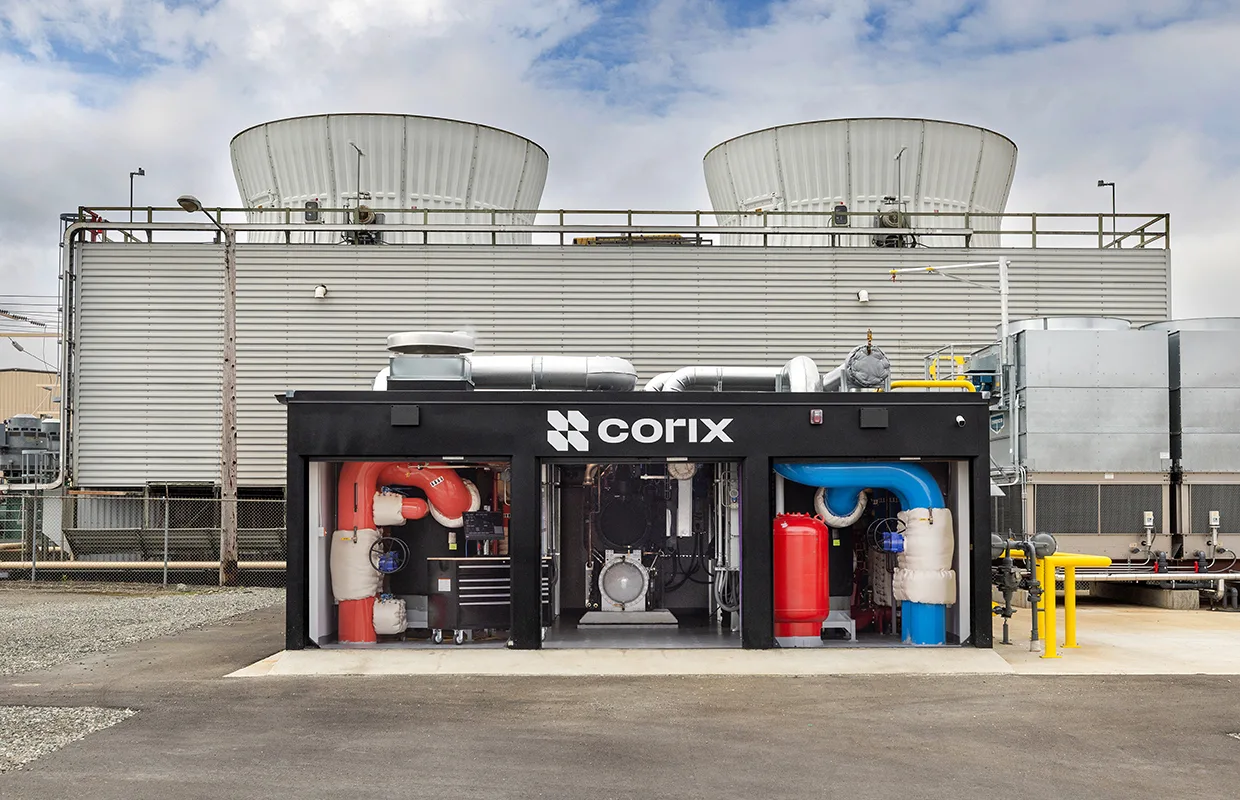
Corix develops, finances, owns, and operates district energy systems to provide heating and cooling to neighbourhoods, campuses, and large mixed-use developments.
TECHNOLOGY-AGNOSTIC APPROACH
Corix’s presence currently spans two Canadian provinces and four US states, driven by a workforce of over 100 people across engineering, finance, operations, development, and other professions.
The company’s client base ranges from municipalities and universities to large real estate developers and institutional partners.
“What ties them all together is the need for reliable, long-term energy infrastructure that supports sustainability and affordable development,” Mandelbaum informs.
Corix utilizes a range of technologies including heat recovery, geothermal exchange, heat pumps, biomass processing, and more.
“We’re a technology agnostic type of business – we put together the platform and deliver the infrastructure,” he surmizes.
The company consistently uses the right mix of tools and infrastructure to meet its clients’ economic and environmental objectives.
With this in mind, Corix is committed to cultivating enduring energy systems for communities to thrive – a mission that is built on two fundamental principles.
“The first is that energy infrastructure should be built to serve communities for generations and district energy systems are long-lived assets that often operate for 100 years or more, so we approach everything with a long-term perspective,” Mandelbaum outlines.
The company’s second principle is continually striving to facilitate energy better for its communities, customers, and the environment, which drives its mission of developing resilient, world-class district energy systems.
“District energy is often viewed as the invisible infrastructure – people tend to see buildings, roads, and power lines, but you don’t see the piping networks underground that make these communities function.
“Our work is all about building the backbone of infrastructure and systems that quietly operate in the background but play a critical role in enabling sustainable communities,” he surmizes.

“Our work is all about building the backbone of infrastructure and systems that quietly operate in the background but play a critical role in enabling sustainable communities”
Diego Mandelbaum, CDO, Corix
SUSTAINABLE, CUSTOMIZED TECHNOLOGY AT SCALE
Heating and cooling systems represent a major proportion of urban energy use and greenhouse gas (GHG) emissions, often times equating to more than 50 percent.
The needs of these systems have historically been met through individual boilers, chillers, and heat pumps with large electricity and natural gas connections fitted in clients’ buildings.
The district energy sector takes a slightly different approach – rather than installing individual equipment for thermal energy needs, energy is produced centrally and then distributed through a shared network of underground pipes.
“This allows Corix to integrate sustainable technologies at scale in a far more efficient manner by allocating scarce resources, ensuring the efficient use of capital, electricity, physical space, and energy commodities,” Mandelbaum sets out.
As such, the company can ‘plug-and-play’ the right technology for the job, whether it be a geoproject, biomass, heat recovery, heat pump, or electric boilers, therefore creating specialist platforms depending on what’s required.
“What I think distinguishes Corix’s approach to the market is not only our ability to develop these platforms from concept all the way through to long-term operations, but also how seamlessly we integrate the engineering, finance, construction, regulatory expertise, and operations together from inception.
“This is all executed with an unwavering focus on creating value for our communities, customers, and partners,” he prides.
POWERING UTAH CITY
Positioned as one of the fastest-growing states in the US, Utah has an increasing need for new infrastructure, particularly in the energy industry.
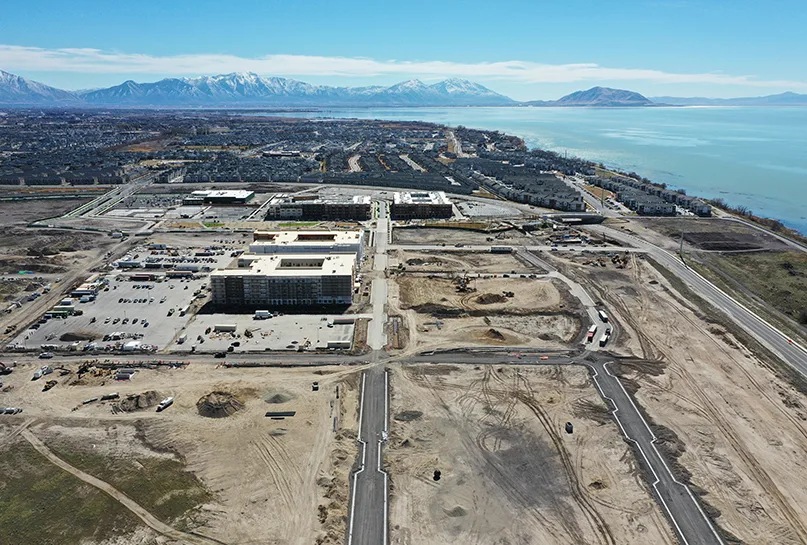
With this in mind, Corix is developing a district energy system for Utah City in Vineyard, Utah, comprising a 350-acre mixed-use community with a shared network of heating and cooling.
This follows a recently received positive precedent regulatory decision from the Utah Public Service Commission, making it the first modern, regulated district energy system in the state to provide both heating and cooling.
This decision sets a brand-new regulatory framework for how energy infrastructure will be developed across Utah, with surrounding states looking to replicate it.
“Our collaboration with the project partners is one of the things that makes this such a unique and special project,” Mandelbaum expands.
“It is a giant masterplan development on the eastern shore of Utah Lake, which will be a vibrant, walkable urban center that integrates residential, retail, commercial, and medical research space.
“Utah City is an entirely new city that’s getting built out, and it’s one of a kind in North America,” he adds.
Once the district energy system is complete, it will serve nearly 20 million square feet (sqft) of residential, commercial, and institutional space with an interconnected piping network and central energy plants that combine to create a reliable heating and cooling system.
The project being built from the ground up also provides a unique opportunity to integrate district energy infrastructure from the very beginning.
Corix’s real estate partners can save hundreds of millions of dollars across the project lifecycle as a result, with the project saving over 70 megawatts of electric capacity from an already-constrained power grid.
“The system will integrate a huge amount of heat recovery that will be both incredibly efficient and help reduce emissions.
“For us, this development is not just an asset milestone in our growth – at its core, we believe it will set a precedent for the way infrastructure continues to develop across the entire state,” Mandelbaum shares.
“Utah City is a really great example of how thoughtful urban planning infrastructure and environmental stewardship can work together to create something that’s truly transformative.”
“Utah City is a really great example of how thoughtful urban planning infrastructure and environmental stewardship can work together to create something that’s truly transformative”
Diego Mandelbaum, CDO, Corix
TRANSFORMING WASTE HEAT
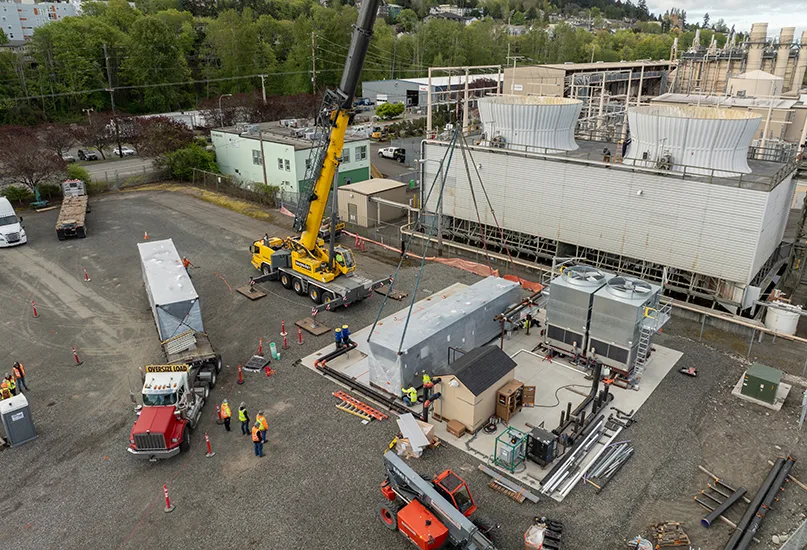
Elsewhere, Corix is also proud to play a key role in the Port of Bellingham’s Waterfront District Redevelopment in Whatcom County, Washington, US.
The port is developing approximately two million sqft of mixed-use real estate and identified an opportunity for a district energy network to support the build-out from both an economic and environmental perspective.
The project is co-located with an existing power plant that provides energy to the grid; however, the facility generates a tremendous amount of waste heat that is dispelled into the surrounding environment.
Corix has worked with Puget Sound Energy, the local electric utility, to put the by-product to good use.
“Through the project, we run a pipe to the power plant, tap into their cooling tower, and take all the waste heat that would have otherwise just gone into the atmosphere.
“We run that energy through a heat pump, which is then used to heat the entire build-out of the project,” Mandelbaum explains.
This process provides clean, sustainable, and efficient heating and cooling for Corix’s customers – improving efficiency in some cases by 800 percent – it also makes the adjacent power plant more effective as it helps cool down the waste heat generated.
“It’s a real win-win scenario for the developer, customers, and the power plant that we’re actually taking waste heat from.”
DEVELOPING DISTRICT ENERGY
Corix has a vast operational presence, emphasized by its wealth of projects across North America.
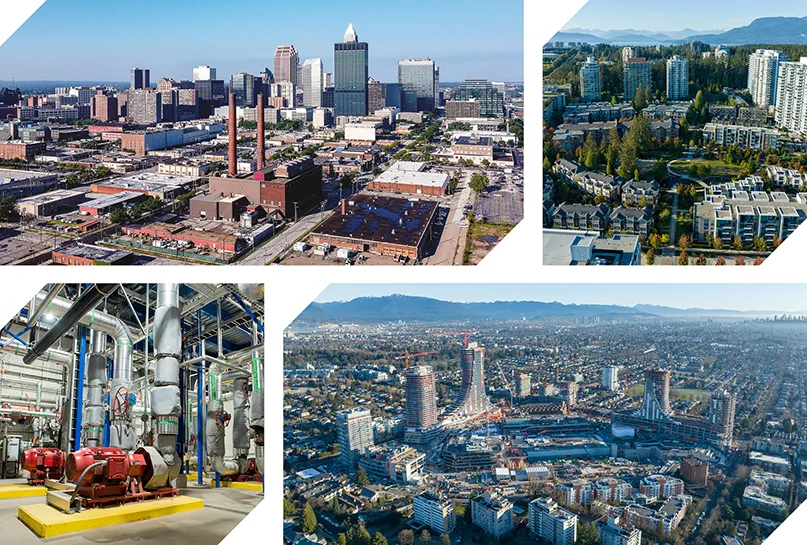
For instance, it is working on the Burnaby Mountain District Energy Utility (BMDEU) project, which serves Simon Fraser University’s (SFU) Burnaby campus. The company’s role in the development involves taking wood waste and converting it into thermal energy at a biomass plant located on campus.
This is subsequently used to heat the majority of the campus, helping SFU reduce its GHG emissions by around 90 percent. The thermal energy is also used to heat a nearby residential community.
Meanwhile, through its Oakridge Energy project, Corix is co-developing a low-carbon district energy system that will be one of the largest geoprojects in North America. It will serve 14 residential towers, a one-million-sqft mall, and a nearly five-million-sqft mixed-use real estate complex.
The company’s recent projects additionally include the development of a district energy system beside the University of British Columbia (UBC), which serves a residential district currently being built out into a big master plan community.
“The system happens to be beside a very large particle accelerator, and there are future plans in place to tap into that accelerator and utilize it to both decarbonize the district energy system and provide immense efficiencies to benefit our customers,” Mandelbaum expands.
Finally, the company has accelerated system modernization and transformed the existing coal-fired district energy utility in downtown Cleveland into a high-efficiency gas plant, cutting air emissions by 84 percent.
“We plan to use a lot of the footprint we have in Cleveland to springboard into surrounding states, as well as looking at eastern Canada as well,” he sets out.
LOOKING FORWARD
In order to continue its trajectory of success, Corix has a simple list of priorities that put both existing and future customers at the center.
First, this means is developing its existing portfolio of district utilities to ensure the company continues to deliver safe, clean, reliable, and affordable energy to all the communities it serves.
Corix’s second priority is execution discipline, such as ensuring it completes projects that are already in flight in a way that’s timely, on budget, and meets the specified objectives.
“Our third priority is looking at how we replicate the success we’ve already had across North America to both scale the company and bring the benefits of district energy to communities across Canada and the US,” Mandelbaum concludes.
This company profile was produced by the editorial team at North America Outlook, a publication within the Outlook Publishing global network of B2B industry magazines.
Outlook Publishing showcases organisations and leadership teams shaping sectors including manufacturing, mining, construction, healthcare, supply chains, food production, and sustainability.
North America Outlook highlights organisations driving innovation and industry leadership across North America.