



Moon maven, Skyler Chan, has ambitious designs on Earth’s celestial companion. The Founder and CEO of GRU Space reveals his plans for the first lunar hotel, establishing a new era of space tourism and charting an exciting course for humanity’s continued expansion into the cosmos.
A STELLAR STAY WITH A WORLD CLASS VIEW
Many children are captivated by the idea of adventure, and as they gaze up at the stars, they often nurture dreams of exploring the vastness of space.
However, only a select few ever transform those aspirations into reality. One such exceptional individual is Skyler Chan, the visionary Founder and CEO of GRU Space.
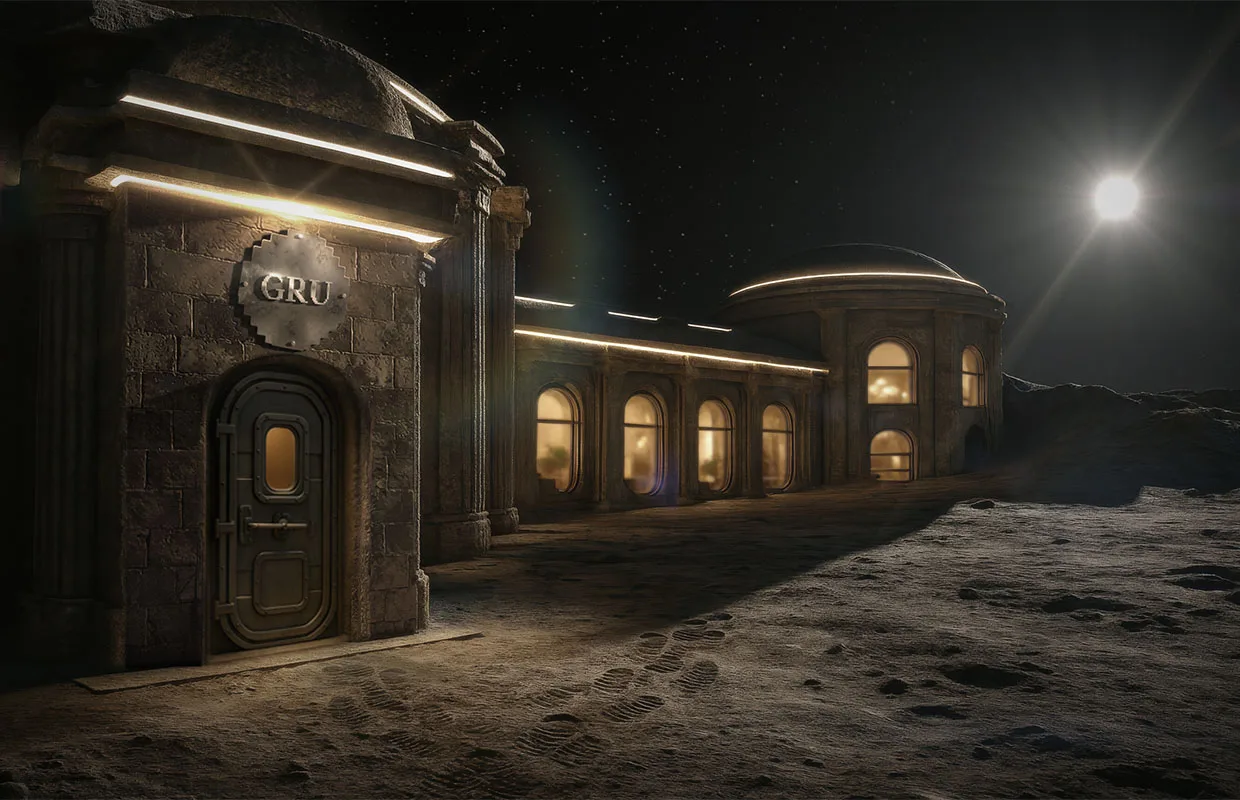
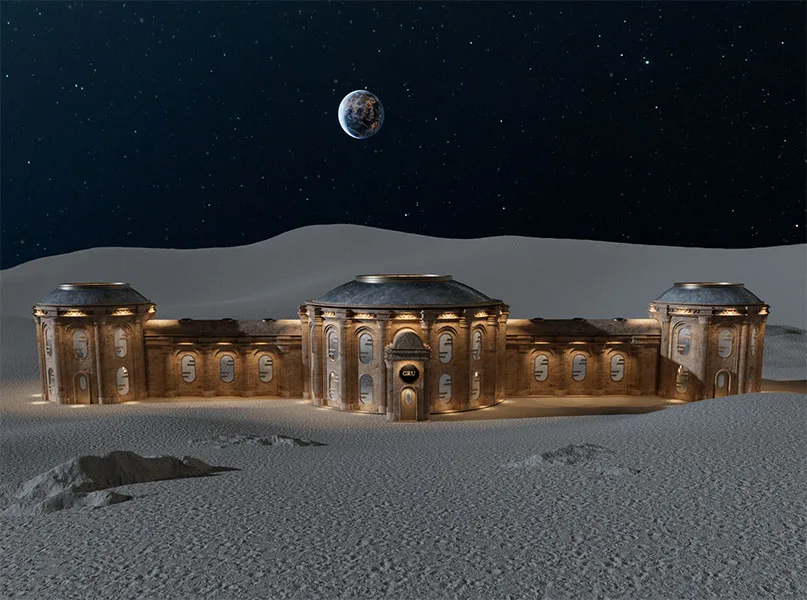
With relentless determination and a pioneering spirit, Chan is pushing the boundaries of what is possible by creating the first lunar hotel, inspired by the Greco-Roman architecture of San Francisco’s Palace of Fine Arts.
“I started GRU Space because, like many others growing up, I aspired to become an astronaut and even had the opportunity to learn to fly gliders at an Air Force base in Canada.
“However, I realized that rather than just going to space myself, it would be more meaningful for everyone to have the chance to experience it,” he shares passionately.
Chan became obsessed with understanding what it would take to make space travel accessible to all – this may seem impossible, but as technology progresses, it’s inevitable.
“Humanity has always explored new frontiers, and the Moon is just the next step, followed by Mars. It’s exciting to witness this new era of exploration!”
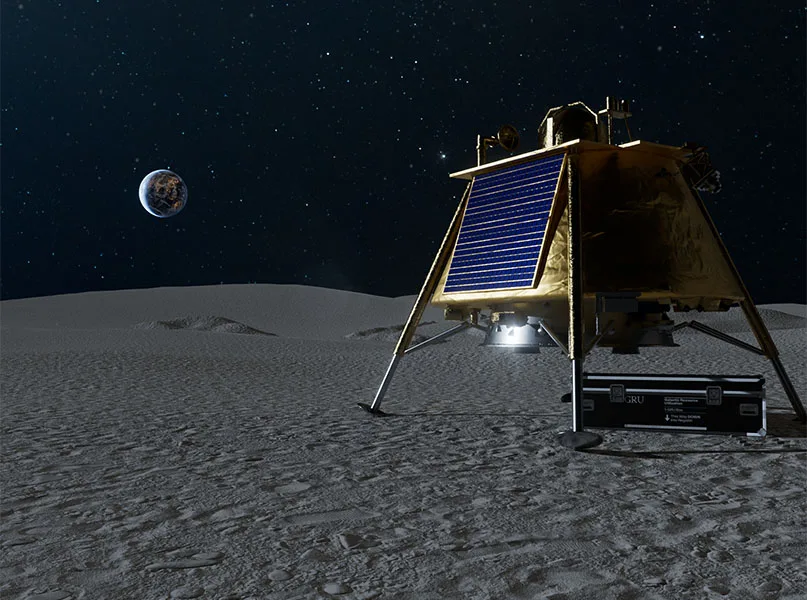
GRU’s current aim is to launch the hotel in 2032. The innovative inflatable accommodation will be built on Earth, then transported to the lunar surface, facilitating four guests for a five-night stay.
“We envision new urban landscapes on the Moon, comparable to New York, Hong Kong, or London. Imagine what the next great city on the Moon could look like!” Chan exclaims.
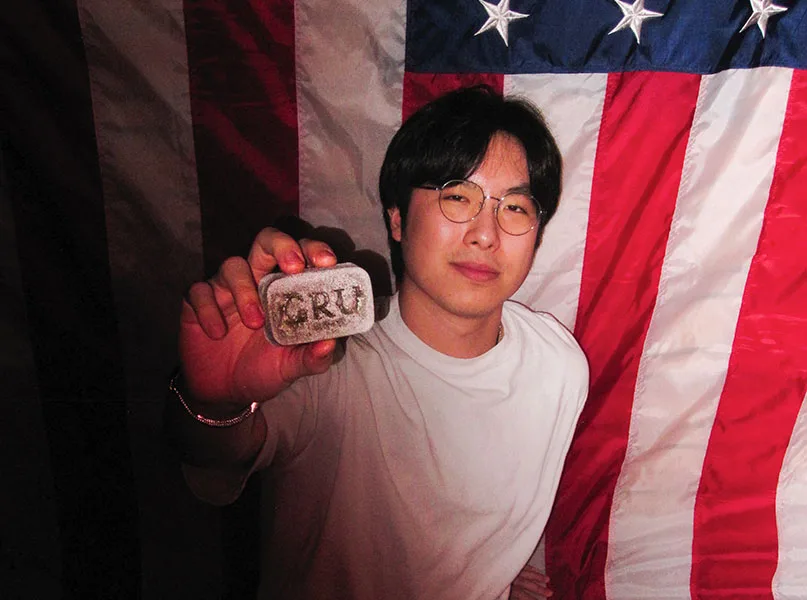
“We’ve been developing a brick made from lunar regolith simulant in our lab, using a technology we plan to test during our demonstration mission on the Moon, where we will combine lunar regolith and our proprietary geopolymer mixture, which acts as a binding agent.”
Influenced by his mom’s career as an architect and his own engineering background, Chan aims to create a lunar structure that future generations will regard as a significant landmark, similar to Stonehenge or the Pyramids.
“I want the hotel to be something that signifies an important moment in our exploration of the universe,” he contemplates.
CONSIDERATIONS FOR MOON HABITATION
Humans cannot become interplanetary without solving the problem of off-world sustainable habitation, which is essential for long-term living and crucial for transforming human history – allowing billions to thrive on the Moon and Mars.
“Successful off-world habitation hinges on overcoming several key challenges, including ensuring safe living environments amid radiation, extreme temperature fluctuations, and lunar dust hazards.
“The hotel will incorporate advanced systems for air recycling, water conservation, and radiation shielding, alongside robust safety features to protect guests from solar storms and micrometeoroids.”
To ensure survival on the Moon, several key issues must be addressed.
“Firstly, removing a spacesuit after leaving the rocket risks exposure to the vacuum of space. Secondly, temperature fluctuations are extreme because a lunar day lasts about 14 Earth days, followed by 14 days of darkness,” Chan explains.
“The third challenge is radiation from galactic cosmic rays (GCRs) and solar particle events. A warning system and radiation shielding are essential, including the installation of safe areas with thicker walls. Lastly, we must consider orbital debris.”
In addition, GRU Space is actively developing specialized materials to shield inflatable habitats from meteorite impacts, ensuring guests’ safety.
These considerations are vital for catering to adventurous early adopters.

“We envision new urban landscapes on the Moon, comparable to New York, Hong Kong, or London. Imagine what the next great city on the Moon could look like!”
Skyler Chan, Founder and CEO, GRU Space
PIONEERING LUNAR LIVING
Following the lunar hotel’s announcement, Chan was astounded by the overwhelming global interest.
“It felt uniting, bringing together various organizations and experts from architecture to science, and there are abundant collaboration opportunities, such as maintaining communication between the hotel’s inhabitants and Earth.”
System power and technical details also need to be considered, and GRU Space will be selecting partners to address them.
Chan’s journey as the founder has changed his perspective on humanity’s place in the universe and he hopes to expand this passion to potential collaborators and team members.
“I feel like I’m finally doing my life’s work. I remember drawing the solar system at age five and sketching what habitats may look like on the Moon and Mars.
“I’ve always loved space, from dressing up as an astronaut for Halloween and geeking out over facts. It brings me immense fulfillment; despite the workload, I feel blessed that the universe is urging me to go all in.
“My role is to rally partners, investors, and our team around this mission. Many space companies struggle to connect with people, but I believe our approach will unite everyone in a shared part of human evolution – looking up at the Moon.
“It’s a universal experience ingrained in our DNA, something our ancestors have appreciated for generations.”
Chan plans to visit the lunar hotel, expecting the experience to be emotional, scientific, and gratifying.
“I believe that space travel should be accessible to everyone, and I think it will become more available to a wider audience over time,” he states.
“Just as the invention of the airplane was initially for the wealthy, many new technologies today rely on funding from those with capital. However, with progression, air travel became more affordable, allowing us all to enjoy inexpensive transatlantic flights.”
GRU Space shares similar hopes for the future of space exploration, especially with In-Situ Resource Utilization (ISRU) technology, which uses local resources on the Moon to produce construction materials.
This approach can significantly reduce costs by avoiding the need to transport materials from Earth.
“Creating affordable, liveable spaces on the Moon will become increasingly feasible, making it an exciting prospect!” Chan enthuses.
A GIANT LEAP IN INNOVATION
GRU Space is utilizing and developing new technologies to enhance its operations and improve guest experiences.
“As a start-up, we focus on our end goal of building a lunar hotel. We break this down to identify the specific engineering requirements for such a venture,” outlines Chan.
“Our first step is to develop technology to autonomously deploy an inflatable habitat on the Moon, as traditional construction methods aren’t viable. We need a concept of operations (CONOPS) to test it effectively, as this is groundbreaking work.”
Another essential element of space engineering is ‘flight heritage’ – demonstrating technology in the environment where it will be used, such as creating bricks on the Moon. Achieving this supports technology maturation and fosters partnerships.
“Our initial payload minimizes extra components, using a geopolymer from Earth to produce bricks from lunar materials, as energy-intensive methods like sintering are not practical given the Moon’s high energy costs,” he enlightens.
“There’s also growing interest among brands in being the first to have their logos on the Moon, similar to Formula 1 marketing. We’re designing our payload to incorporate these elements, generating excitement as we aim to mark a monumental step in lunar construction.”
“Our first step is to develop technology to autonomously deploy an inflatable habitat on the Moon, as traditional construction methods aren’t viable. We need a CONOPS to test it effectively, as this is ground-breaking work”
Skyler Chan, Founder and CEO, GRU Space
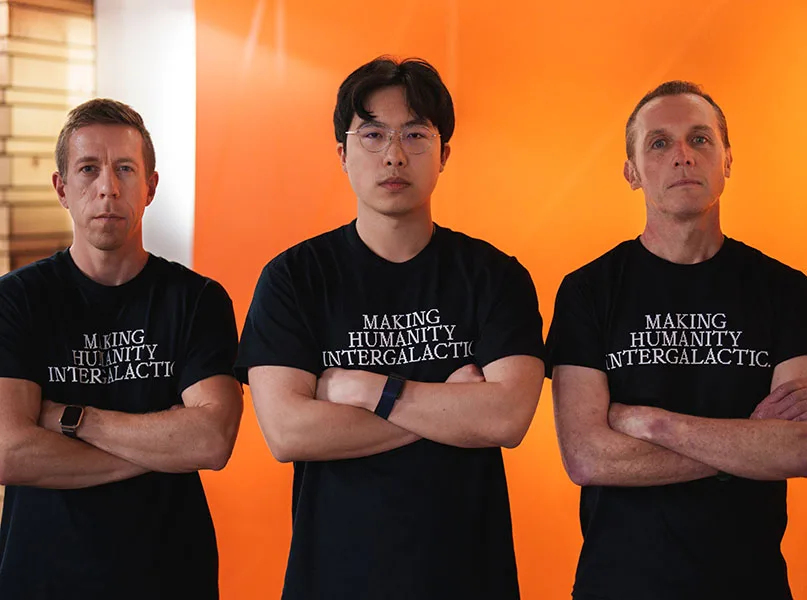
EXPLORING STELLAR SUSTAINABILITY
Utilizing specialist resources, such as lunar regolith and ice, for building materials raises important questions about environmental sustainability.
Indeed, incorporating solar energy into the project is crucial for promoting eco-friendly practices and minimizing the Moon’s impact.
While solar is one option, nuclear power and developing orbiting systems to beam energy also present exciting possibilities.
“Feasibility is key as we assess potential partners for power services. We need to evaluate their capabilities and track records to create closed-loop systems that reuse resources. This approach is essential not only for cost savings but also for environmental sustainability.
“We aim to establish a strong presence on the Moon, similar to the Industrial Revolution in the UK. While some disruption to the lunar environment is inevitable, we strive to mitigate our impact,” Chan strategizes.
Methods for traversing the Moon’s surface, primarily for goods transportation, are also being explored, with discussions on lunar agriculture ongoing.
“We have opportunities to test various crops in the lunar environment, which may attract scientific labs. As a construction and development company, we can adapt our technology and build facilities such as power plants and greenhouses,” he points out.
“Our main challenge is developing pressure vessels for safe off-world habitats, which are essential for conducting Earth-like activities in space. Additionally, there is potential for space tourism by integrating scientific payloads into private astronaut missions, appealing to those interested in contributing to research.”
AN INTERGALACTIC FUTURE
The lunar hotel’s development is poised to greatly influence the future of space tourism, while GRU Space has established long-term objectives for exploration beyond this initiative.
“The Moon represents the pinnacle of this exciting experience. Once the lunar hotel is built, it will truly be the flagship attraction for space tourists,” anticipates Chan.
“Visiting the Moon is a significant step up from just orbiting Earth for five minutes. The experience of walking on the lunar surface and witnessing events like the Earthrise is unlike anything else.”
Chan is enthusiastic about the future of space exploration and his company’s ambitious plan. While some may see the venture as outrageous, he’s determined to make it a reality.
“This is just the starting point. We’re building a hotel on the Moon to demonstrate off-world habitation. Once established, we can accelerate lunar living by constructing the necessary infrastructure, like roads and warehouses, laying the foundation for a city.”
As rocket technology advances, humanity will inevitably turn its attention to Mars, drawing on the experience gained from lunar exploration to establish the first cities on the red planet.
The discussion within the space community revolves around which should be prioritized. However, GRU Space acknowledges the unique advantages of both and aims to replicate its lunar initiatives on Mars by developing essential infrastructure.
“Long-term, we need to consider the Kardashev scale and how to utilize resources efficiently. This involves leveraging technology to expand our capabilities.”
The Kardashev scale measures a civilization’s technological advancement based on its ability to harness energy, ranging from planetary to galactic levels. Proposed extensions of the scale even consider the hypothetical existence of multiple universes.
The ultimate goal for GRU Space is to enable resource utilization on the Moon, Mars, and beyond, facilitating a deeper journey into the solar system and, eventually, the galaxy. The strategy will be economically beneficial and promote innovative solutions that people value.
“Achieving galactic resource utilization is our ultimate goal – that’s why our company is named after it.
“Our vision extends beyond the lunar hotel; it heralds a new era of intergalactic space travel that includes all of humanity,” Chan emphatically concludes.
This article was produced by the editorial team at North America Outlook and published as part of the Outlook Publishing global network of B2B industry magazines.
Outlook Publishing delivers industry insights, company stories, and sector coverage across manufacturing, mining, construction, healthcare, supply chains, food production, and sustainability.
North America Outlook provides ongoing coverage of organisations and developments shaping industries across North America.