





Denis Felix, Executive Director of the Grenada Authority for the Regulation of Financial Institutions, outlines its pivotal role in regulating the non-bank financial sector, championing consumer confidence, and fostering a stable economic environment through strategic oversight and modernization initiatives.
FORTIFYING GRENADA’S FINANCIAL FUTURE
The Grenada Authority for the Regulation of Financial Institutions (GARFIN) was established in 2007 as a statutory body responsible for overseeing and regulating the non-bank financial sector in Grenada, the southernmost country of the Eastern Caribbean Currency Union (ECCU).
GARFIN is dedicated to building and maintaining public confidence in Grenada’s financial system by ensuring its integrity through diligent regulation and thorough supervision of designated non-bank financial institutions, including credit unions with total assets of ECD$1,612.9 million, development banks – ECD$122.3 million, microlending institutions – ECD$18.6 million (total loans), building societies – ECD$17.7 million, insurance companies – ECD$600 million (general ECD$252 million and long-term ECD$358 million), and school savings unions – ECD$2 million.
Envisioning itself as a highly professional and effective regulatory authority focused on ensuring stability, thereby contributing to a strong economic environment, GARFIN has established long-term goals to achieve sustainable growth and development in Grenada’s financial industry.
“As a regulator and supervisor, we strive for a safe, sound, profitable, and well-functioning financial sector that can withstand shocks and contribute positively to the people and economy of Grenada, Carriacou, and Petite Martinique,” introduces Denis Felix, Executive Director of the authority.
The long-term goals for GARFIN to achieve sustainable growth for non-bank financial institutions include the continuous development of stress testing, especially within the insurance and credit union sectors, which will improve supervision and enable proactive identification of weaknesses or risks that require attention.
In addition, there will be ongoing modernization of legislation, including the Co-operative Societies Act, the new harmonized ECCU Insurance Act, and the revised Building Societies Act.
“We aim to maintain our partnership with regional regulators to establish a standards-setting body – the Eastern Caribbean Financial Stability Board (ECFSB). This initiative will help synchronize the regulatory framework in the ECCU,” Felix outlines.
“Additionally, we will collaborate with the credit union sector to enhance the understanding of risk-weighted capital and transition current practices to a risk-based lending methodology.”

ENHANCING ECONOMIC ENLIGHTENMENT
Currently, the non-bank financial sector includes credit unions, insurance companies, agents, brokers, adjusters, sales representatives, and underwriters, as well as encompassing pension plans.
Besides money service businesses – such as microlending institutions and money transfer operators – the sector consists of a building society, a development bank, friendly societies, an international betting company, school savings unions, and virtual asset service providers.
To strengthen consumer protection, GARFIN is actively implementing several strategies designed to support individuals with varying levels of experience, ensuring all consumers can navigate the financial landscape with greater confidence and security.
“One key initiative is the issuance of guidelines requiring insurance companies to clearly inform their clients of the need to obtain current valuations of their property when seeking insurance for the first time or during annual renewals.
“This will help clients understand the financial consequences of being underinsured,” Felix affirms.
Further to these efforts, GARFIN will continue to collaborate with the government and the Eastern Caribbean Central Bank (ECCB) on ongoing financial literacy programs to empower individuals to make informed, intelligent financial decisions.
“We are working with the Grenada Co-operative League, the umbrella organization for credit unions, to establish a stabilization fund that aims to protect members and depositors.
“GARFIN will also support the creation of the Office of Financial Conduct and Inclusion for the ECCU, which will regulate issues related to financial consumer protection and business conduct,” expands Felix.

“As a regulator and supervisor, we strive for a safe, sound, profitable, and well-functioning financial sector that can withstand shocks and contribute positively to the people and economy of Grenada, Carriacou, and Petite Martinique”
Denis Felix, Executive Director, GARFIN
SAFEGUARDING FINANCIAL STABILITY
Playing a crucial and dynamic role in the financial framework, GARFIN ensures compliance with established standards and fosters a stable economic environment.
To maintain public confidence in the Grenadian financial system, the authority promotes public understanding and awareness. This includes educating individuals about the benefits and risks of various investments and transactions and providing accurate information and advice.
“To ensure consumer protection, it is essential to consider the varying levels of risk associated with different types of financial operations. Recognizing that consumers possess differing degrees of experience and expertise in relation to various regulated activities is vital,” highlights Felix.
“Additionally, we must address their diverse needs for accurate information and advice while upholding the principle that individuals should take responsibility for their own decisions. Therefore, a balanced approach is necessary to safeguard consumers while empowering them in their financial choices.”
GARFIN conducts off-site supervision by analyzing monthly, quarterly, and annual returns from regulated entities.
This includes trend and ratio analysis to assess financial performance and ensure compliance with solvency and liquidity requirements.

“Focusing on high-risk areas, we ensure insurance companies maintain adequate assets in their insurance funds to meet policyholder obligations,” he states.
The compiled data is shared with relevant sectors for benchmarking and oversight by entities such as the ECCB, Government of Grenada, and International Monetary Fund.
“Every year, we produce a Supervisor of Insurance Report, which provides a comprehensive and in-depth review and analysis of the insurance sector, and an Annual Report containing data and analysis on the non-bank financial sector. These reports are tabled before parliament by the Minister for Finance,” Felix tells us.
“On-site examinations involve reviewing a regulated entity’s records, processes, and controls, and findings from off-site supervision determine the need for these examinations, which can be targeted or comprehensive. An exit meeting is held with management to discuss findings and corrective actions, followed by reporting to the entity’s board.”
Prudential meetings are also held to tackle issues such as regulatory breaches and financial performance, while public members with grievances, particularly those related to vehicular accidents, can submit complaints for resolution.
Moreover, GARFIN has the authority to impose fines, restrict operations, or, in serious cases, appoint managers to ensure fair regulation within the non-bank financial sector.

PROACTIVE PROTECTION
GARFIN plans to adapt its regulatory approach to address emerging trends and challenges in the financial sector, especially during periods of economic uncertainty, by anchoring it in a risk-based supervisory framework and directing daily regulatory and supervisory activities.
High-risk areas, activities, and regulated entities, including those that receive a high level of complaints, are subject to greater scrutiny through more frequent reporting, increased reporting requirements, and more in-depth on-site examinations.
“To address difficulties effectively, our employees undergo regular training on emerging risks, best practices in regulations and supervision, and new developments in financial standards to equip them to respond to emerging trends and challenges,” insights Felix.
In collaboration with other ECCU regulators, GARFIN aims to implement a technology solution to automate specific tasks.
This initiative is intended to enhance operational efficiency and give staff more time to concentrate on higher-level responsibilities.
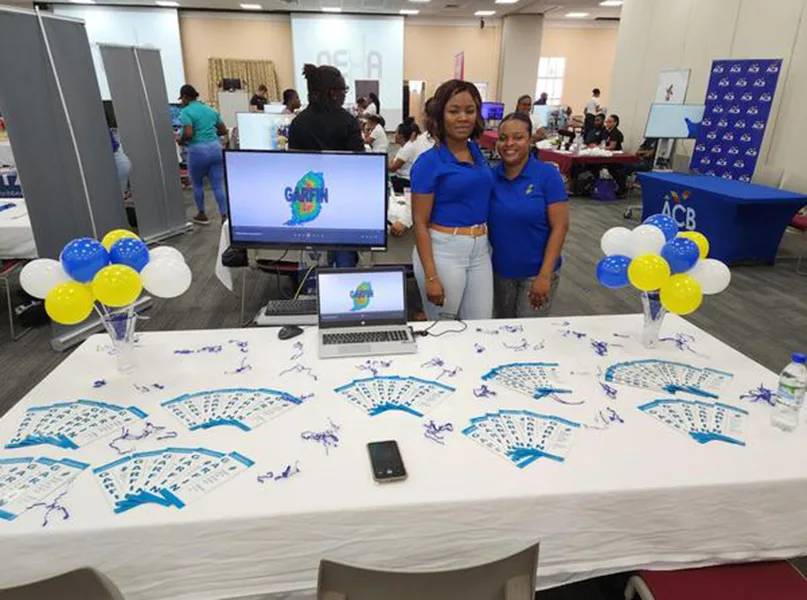
Additionally, it is developing a crisis resolution plan to formalize its regulatory strategy during periods of economic uncertainty.
“Through effective regulation and supervision, we ensure all regulated entities are financially sound, compliant with applicable laws and regulations, and exhibit good market conduct,” Felix emphasises.
“This reduces the probability of an entity failing and undermining confidence in the Grenadian financial system,” he continues.
Achieving this requires ongoing collaboration with key partners, including the ECCB, Eastern Caribbean Securities Regulatory Commission (ECSRC), Anti-Money Laundering and Combating the Financing of Terrorism (AML/CFT) Commission, Financial Intelligence Unit, and Ministry of Finance.
“The authority actively participates in regulatory colleges, where the home regulator – meaning the regulator from the head office’s location – conducts a comprehensive review and discussion of specific entities involving executives and senior management,” Felix details.
“This process ensures regulators possess a thorough understanding of the challenges, performance, and stability of a financial group or conglomerate.”
Additionally, GARFIN collaborates with regional regulators on various issues and initiatives to enhance regulatory oversight.
The Regulatory Oversight Committee (ROC) brings together all 10 regulators, including the ECCB, ECSRC, and national regulators such as GARFIN, every quarter to discuss the ECCU financial sector and initiatives aimed at enhancing regulation and supervision.
“To ensure consumer protection, it is essential to consider the varying levels of risk associated with different types of financial operations. Recognizing that consumers possess differing degrees of experience and expertise in relation to various regulated activities is vital”
Denis Felix, Executive Director, GARFIN
RESILIENT AND RELIABLE REGULATIONS
The financial landscape in Grenada is shaped by a blend of regulatory oversight, economic resilience, and adaptability to challenges.
The country boasts a diverse financial sector, which includes credit unions, commercial banks, insurance firms, and investment entities. This sector plays a vital role in supporting economic growth and maintaining stability, which is essential for both consumers and businesses.
The non-bank financial sector, in particular, enhances access to financial services, fosters competition, and promotes financial inclusion, but these institutions often operate under less regulatory scrutiny than traditional banks, posing potential risks to consumer protection and systemic stability.
To mitigate these risks and ensure the security of the financial system, proper regulation and supervision are essential as the industry significantly contributes to overall economic growth and financial stability.
As the primary regulator and supervisor of non-bank financial institutions, GARFIN plays a crucial role in ensuring these entities operate within a framework that promotes integrity and accountability, which in turn strengthens public trust in the financial system.
However, Grenada’s economy has shown impressive resilience, especially in the face of natural disasters like Hurricane Beryl and global challenges such as the COVID-19 pandemic.
This resilience is reflected in the financial sector’s ability to adapt and recover, as well as its commitment to robust regulatory practices.
To maintain public confidence in the financial sector, GARFIN administers strict regulations and conducts regular on-site inspections, ensuring the financial industry remains stable and secure.
“Following the conduct of on-site inspections, robust follow-up performance reviews are carried out in order to ensure notable progress is realised in addressing weaknesses previously identified,” Felix emphasizes.

This commitment to thorough assessments underscores the importance of accountability within regulatory practices.
“A good regulatory authority must be prepared to operate with the highest level of integrity and professionalism. It cannot expect others to do things properly if it operates otherwise,” he points out.
This commitment to high standards not only bolsters public confidence but also fortifies the overall health of Grenada’s financial landscape.
In recent years, there has been increased focus on enhancing financial literacy among the population and promoting responsible lending and borrowing practices.
These ongoing efforts aim to empower individuals and businesses, fostering a sense of progress and confidence in making informed financial decisions.
The interconnectedness of the global economy poses both opportunities and risks for Grenada, and GARFIN’s proactive supervision and risk management approach helps mitigate potential shocks, creating a sense of security and stability for the audience.
Grenada’s financial landscape is marked by resilience, regulatory integrity, and a commitment to fostering growth while safeguarding the interests of all industries.
The continued efforts of GARFIN are pivotal in navigating the complexities of the modern financial world and ensuring a solid foundation for future economic development.
PIONEERING PROGRESS
As it embarks on exciting projects and investments, GARFIN is notably focusing on developing a technology solution for regulatory and supervisory purposes.
“We intend to automate certain functions to allow staff enhanced time to focus on analysis and risk assessments. The intent is for this project to be developed in collaboration with our fellow ECCU regulators,” Felix reveals.
The revision of the Co-operative Societies Act has been a long-standing project, with significant consultation and effort dedicated to refining the legislation for practical use.
“The updated draft bill will be completed and submitted to parliament for approval by December 2025, a significant achievement for GARFIN and a much-needed improvement for the oversight of an ECD$1.6 billion sector.”
For the upcoming year, GARFIN has several plans and priorities, the first of which is to fully implement a practical risk-based supervisory framework for the non-bank financial sector and enact updated legislation and regulations, beginning with revisions to the Co-operative Societies Act and its accompanying regulations.
Additionally, it aims to develop a crisis preparedness and management plan specifically for the non-bank financial sector. It will also establish internationally accepted prudential ratios for insurance companies and building societies.
“To support this, we will focus on capacity building for industry bodies, particularly in the insurance sector. Strengthening cooperation among regional regulators is another priority,” notes Felix.
“This initiative will involve consolidated supervision and the creation of the ECFSB, which will include regulators from all eight jurisdictions in the ECCU, along with the ECCB.”
Furthermore, GARFIN intends to develop a supervisory framework for virtual assets and promote consolidation within the credit union sector by facilitating the transfer of assets and liabilities from smaller, less efficient credit unions to larger, more viable ones.
“All our initiatives are designed to enhance the regulatory environment and improve overall stability in the financial sector,” Felix assuredly concludes.