





Responsible for the regulation and control of all insurers and intermediaries across the archipelago, the Insurance Commission of The Bahamas ensures the country remains a competitive, well-regulated insurance jurisdiction for both national and international markets. Dana Munnings-Gray, Superintendent of Insurance, expands.
BESTOWING SOUND INSURANCE FOR THE BAHAMAS
The insurance landscape in the Bahamas has evolved significantly over the last 20 years, having suffered a fragmented regulatory environment that lacked uniform standards and comprehensive oversight.
The Insurance Act, 2005 was introduced to help tackle such issues as it laid the groundwork for a modernized, risk-based supervisory regime that now underpins both domestic and international insurance activity.
As part of this evolution, the Act empowered the creation of the Insurance Commission of the Bahamas (ICB), enabling it to serve as the licensing and supervisory authority for all insurance entities operating within the jurisdiction, namely national and global insurers and intermediaries, including salespersons.
The creation of the Commission as an independent statutory body in 2009 marked a strategic shift in the governance of the Bahamas’ insurance sector as it gave rise to a more agile, supervisory framework, enabling timely, risk-based decision-making and a focused approach to sector-specific challenges.
Since its establishment, ICB has expanded on the foundation laid by the Insurance Act, 2005 by developing comprehensive rules and guidance in critical areas such as anti-money laundering (AML), combating the financing of terrorism (CFT), counter-proliferation financing (CPF), corporate governance, market conduct, and climate-related financial risk.
These efforts have contributed to a more resilient and transparent insurance market, strengthening confidence among domestic and global stakeholders alike.
“The reforms brought the Bahamas in closer alignment with international best practices and underscored the jurisdiction’s commitment to financial soundness and policyholder protection,” opens Dana Munnings-Gray, Superintendent of Insurance.
Indeed, the Bahamas now boasts a well-regulated insurance sector that can maintain the flexibility and responsiveness valued by market participants.
“The Insurance Act, 2005 served as the catalyst for this transformation, and the Commission remains steadfast in its commitment to advancing the framework to meet emerging risks, foster innovation, and ensure long-term sector sustainability,” she elaborates.

PROMOTING SOUND AND PRUDENT INSURANCE
ICB is the independent statutory body responsible for regulating and supervising all insurance activity within the Bahamas, providing comprehensive oversight of domestic and external insurers as well as agents, brokers, adjusters, and salespersons operating in the jurisdiction.
The Commission is deeply committed to operating with integrity, consistency, and fairness, ensuring regulatory actions protect policyholders while supporting a stable and trustworthy industry environment.
“Our role is to ensure that the insurance sector operates in a safe, sound, and transparent manner that serves both local policyholders and international clients,” Munnings-Gray insights.
ICB’s mandate covers a broad range of regulatory functions, including licensing, prudential supervision, market conduct oversight, enforcement, and the ongoing development of rules and guidelines aligned with global standards.
The Commission’s domestic market includes life, health, property, casualty, and motor insurance services for Bahamian residents, while its international insurance activities are often formed by global clients seeking customized risk management and self-insurance solutions.
“In both spheres, we emphasize financial resilience, sound governance, and effective risk oversight.”
Headquartered in New Providence, ICB is supported by a multidisciplinary team of nearly 80 professionals with expertise in supervision, legal affairs, policy development, risk, data analytics, and consumer protection.
In addition to its regulatory functions, the Commission actively promotes financial literacy, innovation readiness, and compliance with AML, CFT, and CPF requirements.
The ICB is distinguished by its ability to strike a thoughtful balance between robust regulation and a responsive, innovation-friendly, and supervisory approach.
“A small yet sophisticated jurisdiction, the Bahamas offers the agility to adapt quickly to emerging risks and evolving market conditions while maintaining the high standards of prudential and conduct oversight expected of an internationally respected regulator,” Munnings-Gray highlights.
ICB is equally differentiated by its leadership in captive insurance, especially as the country has built a long-standing reputation for being a cost-effective and professionally supported jurisdiction for risk retention and alternative risk transfer solutions.
“We serve a growing and diverse base of captives and segregated account entities, with a particular appeal to small and medium-sized enterprises (SMEs) seeking tailored, efficient structures backed by strong compliance and governance expectations,” Munnings-Gray points out.
Significantly, the Commission is forward-looking – from issuing guidance on climate-related tasks and introducing regulatory technology solutions to supporting insurance technology (InsurTech) innovation, ICB is committed to staying ahead of international requirements.
“Our independence, combined with strategic industry engagement and continuous regulatory reform, positions the Bahamas as a trusted and competitive player in the global insurance landscape,” she emphasizes.

STABLE, FAIR, AND RESILIENT
ICB possesses the steadfast mission to promote and encourage sound insurance and business management – an objective which it fulfills through a comprehensive supervisory framework, risk-based oversight, transparency, and active industry engagement.
The supervisory framework in particular ensures that the Commission remains accountable for its actions by defining its powers, responsibilities, and regulatory expectations, therefore allowing it to support a stable and trustworthy insurance sector.
“Central to our approach is the goal of maintaining a stable, fair, and resilient insurance market that safeguards policyholders while contributing to the broader economic stability of the Bahamas.
“We prioritize regulatory integrity, policyholder protection, and adaptability to a dynamic risk environment,” Munnings-Gray urges.
The Commission’s work begins with rigorous licensing standards to ensure that only fit and proper individuals and entities are allowed to operate within the sector.
Once licensed, insurers and intermediaries are subject to ongoing supervision, including regular financial reporting, prudential reviews, inspections, and market conduct monitoring.
ICB then assesses key areas such as solvency, corporate governance, risk management, and compliance systems, with emphasis on consumer protection and adherence to AML, CFT, and CPF obligations.
“Our goal is to not only detect and address vulnerabilities but to also foster a culture of sound risk governance and ethical conduct.”
To support this, the Commission issues a suite of rules, guidelines, and sector-specific advisors that promote best practices and clarify regulatory expectations.
ICB’s recent guidance has centered around climate-related financial risk and corporate governance, while also prioritizing stakeholder engagement through consultations, technical briefings, and outreach initiatives, helping to promote transparency.
“From consulting on new policy proposals to providing consumer resources and maintaining a formal complaints process, we prioritize open communication.
“This not only strengthens public trust but also empowers consumers to make informed decisions and reinforces the credibility of the Bahamas’ insurance environment,” Munnings-Gray explains.
This collaborative approach enhances compliance, encourages continuous improvement, and enables the industry to innovate responsibly within a robust regulatory framework.

SHAPING NATIONAL POLICY
As the independent authority established by the Bahamian statute, ICB plays a vital advisory role to government on all matters concerning the regulation and development of the insurance sector.
Therefore, drawing on its deep technical expertise, data-driven supervision, and close engagement with industry stakeholders, the Commission provides evidence-based recommendations that help shape national policy, guide legislative reform, and ensure alignment with international regulatory standards.
ICB also actively monitors global regulatory trends and emerging risks through its participation in international and regional bodies such as the International Association of Insurance Supervisors (IAIS), Group of International Insurance Centre Supervisors (GIICS), and the Caribbean Association of Insurance Regulators (CAIR).
These involvements allow the Commission to benchmark the Bahamas’ regulatory framework against global best practices and share relevant insights with government counterparts.
In recent years, ICB has advised on matters including the harmonization of legislation, the introduction of climate risk guidance, and frameworks for compliance with international tax transparency obligations.
The Commission additionally works closely with key government agencies – particularly the Ministry of Economic Affairs – when representing the Bahamas in international assessments led by institutions such as the Organization for Economic Co-operation and Development (OECD), the Financial Action Task Force (FATF), and the Caribbean Financial Action Task Force (CFATF).
“In these forums, the Commission contributes sector-specific expertise on risk exposure, compliance readiness, and regulatory performance,” Munnings-Gray tells us.
As such, through structured reporting, formal consultations, and strategy policy engagement, ICB ensures the government is equipped with the technical insights and forward-looking guidance needed to maintain a competitive, stable, and globally credible insurance regulatory environment.

ENSURING AN INNOVATION-READY SECTOR
ICB has several recent initiatives that illustrate its focus on strengthening regulatory effectiveness, supporting industry readiness, and enhancing market resilience.
For instance, the Commission is currently leading a landmark legislative reform initiative to harmonize the Insurance Act, 2005 and the External Insurance Act, 2009 into one unified, modern regulatory framework.
This project is significant as it will simplify licensing categories, clarify regulatory obligations, and enhance alignment with evolving international standards, particularly in areas such as group supervision, capital adequacy, and cross-border co-operation.
“For the Commission, this modernization effort is essential to reducing regulatory fragmentation, improving oversight efficiency, and strengthening transparency.”
Elsewhere, recognizing the increasing threat of climate-related events to financial stability, ICB recently launched a survey to evaluate how insurers are managing their environmental risk.
Such findings directly informed the development of the new Guidance on Climate-Related Risk Management. Released in May this year, it aims to embed climate-related considerations into insurers’ governance, risk assessment, and disclosure practices.
“This project is vital for the Bahamas as a small island nation and developing state on the front lines of climate change. It helps insurers strengthen resilience through scenario analysis, reinsurance planning, and disaster preparedness, ensuring the sector remains financially sound and responsive to environmental risk,” she affirms.
Thirdly, in early 2025, the Commission launched a six-week online program, the InsurTech Compliance, Innovation, and Regulatory Practices (ICIRP) Course, in partnership with the Cambridge Centre for Alternative Finance and the Bahamas Institute of Financial Services, reflecting ICB’s commitment to forward-thinking supervision.
This program is significant because it delivers specialized training to insurance professionals and regulators on how to responsibly integrate technology into compliance and oversight frameworks.
“With participants from across the region, the program supports capacity building and promotes responsible innovation, ensuring the sector is equipped to embrace digital transformation while maintaining high standards of governance, ethics, and risk management.”
These initiatives collectively demonstrate the Commission’s commitment to building a resilient, modern, and innovation-ready insurance sector that meets global standards while addressing the unique risks and opportunities facing the Bahamas.
PROFESSIONALISM, INTEGRITY, AND INCLUSIVITY
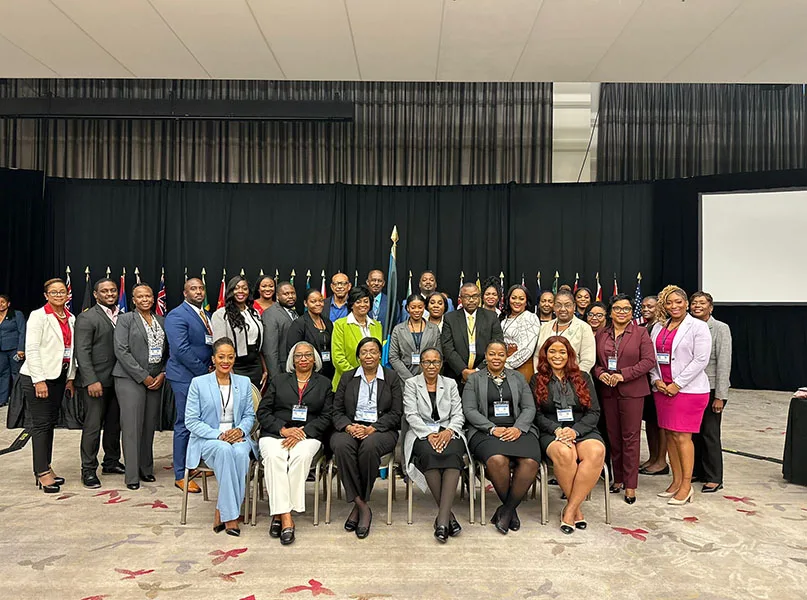
The true strength of ICB lies in its people, who are integral to the Commission’s expertise in supporting the Bahamas’ regulatory environment.
“I am deeply proud of the professionalism, integrity, and expertise our team brings to regulation. Whether in law, risk, actuarial science, data, or consumer protection, each staff member contributes to our reputation for excellence and ability to serve the public with purpose and precision,” Munnings-Gray reflects.
With this in mind, ICB is committed to investing in its people, as the Commission believes continuous learning fuels both personal and institutional growth. From advanced certifications to global training opportunities, ICB supports its staff in expanding their skills, especially in areas such as InsurTech, climate risk, and financial crime prevention.
“Above all, I value the culture we’ve built – one that encourages open communication, shared responsibility, and mutual respect. Our staff are not just employees, they are trusted partners in shaping the future of the insurance sector,” she adds.
Corporate social responsibility (CSR) is equally integral to ICB as a key part of its DNA, consistently embracing opportunities to contribute meaningfully to the broader community it serves.
Indeed, ICB prioritizes support for vulnerable groups, educational access, and civic engagement.
Recent initiatives include donations to the local All Saints Camp, which supports individuals affected by HIV/AIDS, and the Persis Rodgers Home for the Aged, where the Commission provides resources to enhance resident care.
“These efforts are grounded in a simple belief that strong institutions should stand in solidarity with those who are most in need,” Munnings-Gray enthuses.
ICB likewise believes in the importance of financial literacy and public education. Through outreach campaigns, school programs, and community partnerships, the Commission helps citizens understand insurance, manage risk, and make sound financial choices.
“Our efforts reflect a commitment to inclusive growth, social equity, and national development.”

CONSOLIDATION AND STRATEGIC ADVANCEMENT
Looking ahead to the coming year, ICB is prioritizing regulatory modernization, innovation readiness, and institutional strengthening.
A cornerstone of this agenda is the overhaul of the Insurance Act, 2005 and the External Insurance Act, 2009.
These legislative reforms will clarify supervisory expectations, streamline licensing categories, and introduce more risk-sensitive capital requirements, enhancing both regulatory efficiency and investor confidence while positioning the Bahamas as a competitive and credible insurance jurisdiction.
Climate risk and sustainability also remain high on the Commission’s agenda. Following the release of its Guidance on Climate-Related Risk Management, ICB is now focused on evaluating how insurers incorporate climate risk into their governance and enterprise risk management systems.
“As a small island developing state, the Bahamas is particularly vulnerable to environmental shocks. Regulatory vigilance in this area is essential to safeguarding long-term financial stability,” Munnings-Gray urges.
From an innovative perspective, the Commission is building on the success of the ICIRP Course, enhancing its supervisory capabilities for digital insurance models, and reviewing legislation to ensure adaptability to emerging technologies.
ICB is additionally expanding its internal data analytics tools to support more efficient, evidence-based supervision and robust risk assessments across the sector.
Thus, the year ahead promises both consolidation and strategic advancement.
“As we modernize our framework, deepen climate resilience, and prepare for digital transformation, the Commission remains committed to developing a forward-ready insurance industry – one that is sound, transparent, and aligned with evolving global standards,” Munnings-Gray optimistically closes.
INSURANCE COMMISSION OF THE BAHAMAS PARTNERS



This company profile was produced by the editorial team at North America Outlook, a publication within the Outlook Publishing global network of B2B industry magazines.
Outlook Publishing showcases organisations and leadership teams shaping sectors including manufacturing, mining, construction, healthcare, supply chains, food production, and sustainability.
North America Outlook highlights organisations driving innovation and industry leadership across North America.