



Stellantis has unveiled its FaSTLAne 2030 strategy, committing more than €60 billion to new vehicles, advanced technologies, strategic partnerships, and regional growth to strengthen long-term competitiveness.
A FIVE-YEAR ROADMAP FOR GROWTH
Stellantis has unveiled FaSTLAne 2030, a five-year strategic plan that will guide the company’s growth between 2026 and 2030 through investments exceeding €60 billion.
Designed to deliver sustainable, profitable growth, the strategy combines Stellantis’ portfolio of global brands with focused capital allocation, technological innovation, regional decision-making, and an expanded network of strategic partnerships.
“We have great people, global scale, unmatched brands, deep regional roots and strong dealer partnerships,” says Antonio Filosa, CEO of Stellantis.

“Combined with innovation, execution and win-win partnerships, those strengths position us to deliver on our FaSTLAne 2030 ambitions – moving people with brands and products they love and trust.”
Built around six strategic pillars, the roadmap focuses on sharper portfolio management, disciplined investment, partnerships, manufacturing optimisation, operational excellence, and empowering regional teams.
INVESTING IN BRANDS AND TECHNOLOGY
Approximately 60 percent of the planned investment will support Stellantis’ brands and products, including the launch of more than 60 all-new vehicles and around 50 significant model refreshes across battery electric, plug-in hybrid, hybrid, and internal combustion powertrains.
The company has identified Jeep, Ram, Peugeot, and FIAT as its four global brands, with 70 percent of brand and product investment directed towards these marques and Pro One, Stellantis’ commercial vehicle business.
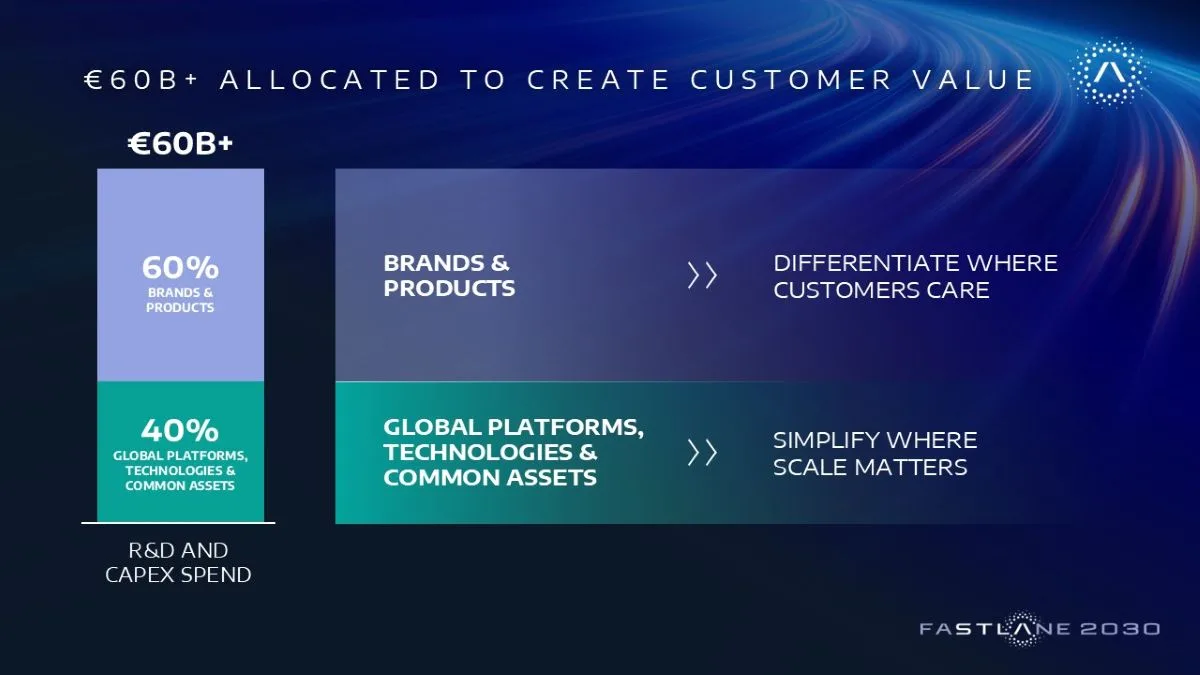
The remaining 40 percent of investment will be allocated to global platforms, powertrains, and technology, with the aim of simplifying vehicle architectures while allowing brands to maintain distinct customer experiences.
By 2030, Stellantis expects half of its global annual vehicle volume to be built on three global platforms, including the new STLA One architecture, whilst AI-enabled technologies such as STLA Brain, STLA SmartCockpit, and STLA AutoDrive are scheduled to launch in 2027.
PARTNERSHIPS AND REGIONAL STRENGTH
Strategic collaborations form another cornerstone of FaSTLAne 2030.
Stellantis plans to expand partnerships with organisations including Leapmotor International, Dongfeng, Tata, Jaguar Land Rover, Applied Intuition, Qualcomm, Wayve, NVIDIA, Uber, Mistral AI, and CATL to accelerate product development, strengthen manufacturing, improve sourcing, and expand market reach.
Alongside these partnerships, the company is placing greater responsibility in the hands of its regional businesses.
Each region will develop plans tailored to local customer preferences whilst benefiting from Stellantis’ global scale. North America is expected to receive 60 percent of investments in brands and products, whilst Enlarged Europe will focus on affordable electric mobility, including a new generation of European-built city EVs based on the forthcoming STLA One platform.
DELIVERING LONG-TERM VALUE
Operational execution is another major focus of the strategy.
Stellantis aims to reduce vehicle development times from as much as 44 months in 2026 to 24 months, whilst targeting top-quartile quality performance across all regions by 2028.
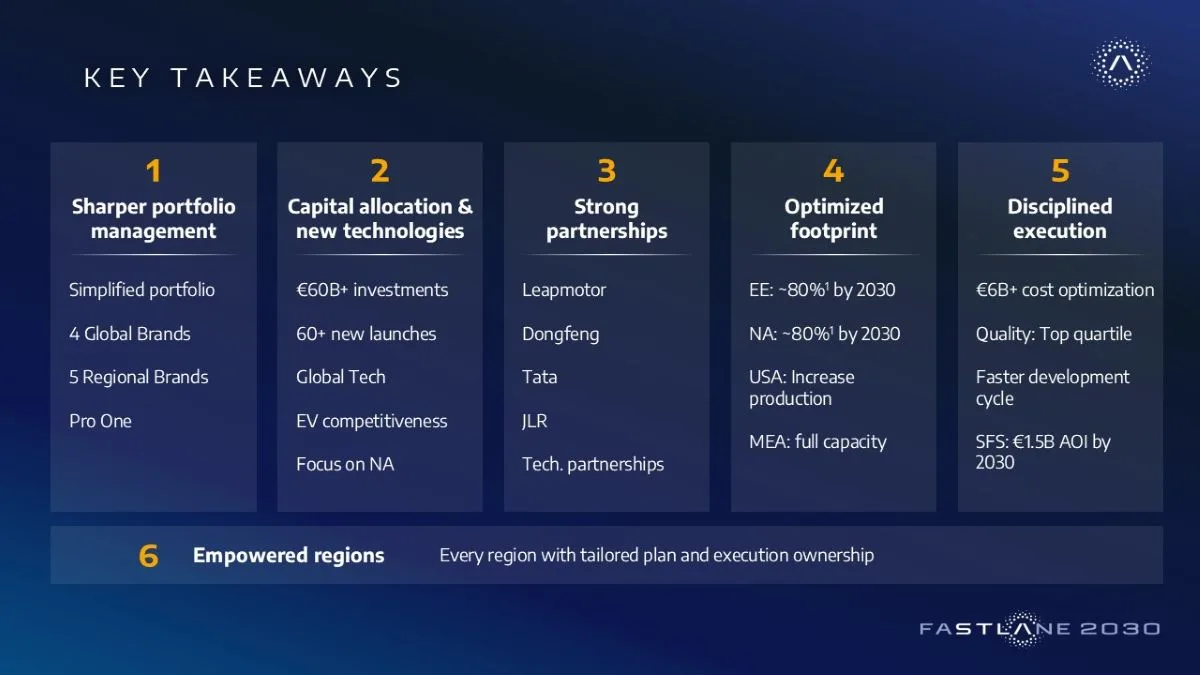
The company’s Value Creation Program is expected to generate €6 billion in annual cost reductions by 2028, supported by more than 120 AI applications already deployed throughout its operations.
Financially, FaSTLAne 2030 targets revenue growth from €154 billion in 2025 to €190 billion by 2030, alongside a seven percent adjusted operating income margin, €6 billion in industrial free cash flow, and more than €1.5 billion in adjusted operating income from Stellantis Financial Services.
Together, these initiatives are intended to strengthen Stellantis’ competitiveness whilst delivering greater customer value through focused investment, technological innovation, and regionally tailored execution.
This article was produced by the editorial team at North America Outlook and published as part of the Outlook Publishing global network of B2B industry magazines.
Outlook Publishing delivers industry insights, company stories, and sector coverage across manufacturing, mining, construction, healthcare, supply chains, food production, and sustainability.
North America Outlook provides ongoing coverage of organisations and developments shaping industries across North America.