



Technology start-up company Orbital has announced plans to launch artificial intelligence data centers in low Earth orbit, leveraging solar power and space cooling to skyrocket infrastructure.
REMOVING THE ENERGY CEILING
On a mission to further intelligence by harnessing the untapped potential of space, Orbital is addressing artificial intelligence’s (AI) most pressing challenge – power availability.
To alleviate this growing constraint, the Los Angeles (LA)-based organization is developing and operating AI data centers in space, leveraging continuous solar energy and radiative cooling to bypass the limitations of terrestrial infrastructure.
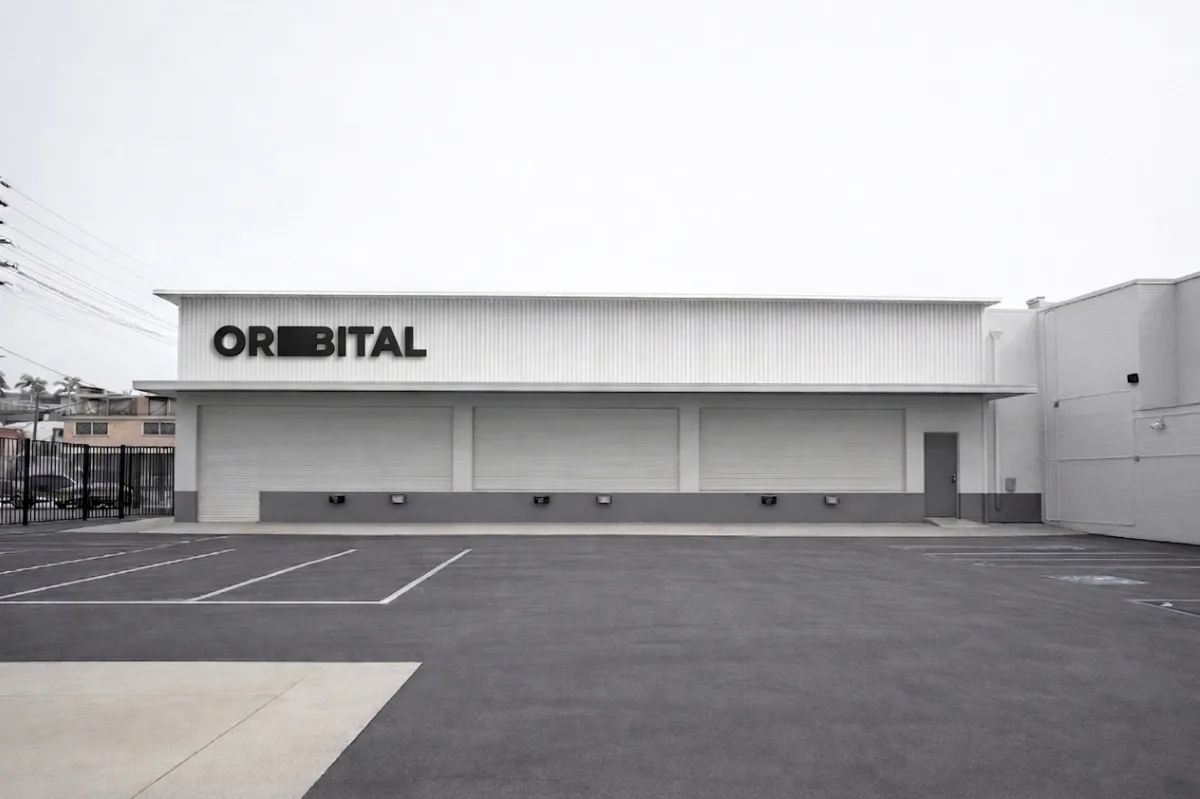
The company is preparing for its first test mission, Orbital-1, scheduled for April 2027, alongside the launch of Factory-1, its dedicated R&D facility in LA.
Orbital was founded on the premise that scaling AI will require a fundamental shift in how compute infrastructure is powered. Rather than competing for finite energy resources on Earth, the company aims to generate power directly in orbit, catalyzing growth for AI development.
Euwyn Poon, CEO and Founder of Orbital, holds a deep-seated belief that the progression of AI is being constrained by the grid:
“Data center economics are dominated by electricity and cooling, and both are getting harder. In orbit, solar power is continuous and cooling is fundamentally different. Orbital is building compute infrastructure that removes the energy ceiling and scales with AI’s potential.”

FUNDING AMBITION
To help complete the mission, Orbital has received backing from a16z Speedrun.
The newly secured funding will support Orbital-1, marking a key milestone in the company’s ambition to deploy data centers in space.
“Speedrun backs founders to explore ambitious ideas — the harder the problem, the better,” says Andrew Chen, General Partner for a16z speedrun.
“Orbital is taking on AI’s biggest constraint with a bold and radical idea.”
At the core of Orbital’s approach is a constellation of satellites operating in low Earth orbit, each equipped with clusters of NVIDIA-powered servers. These satellites utilize solar arrays for continuous energy generation and dissipate heat by radiating it directly into space.
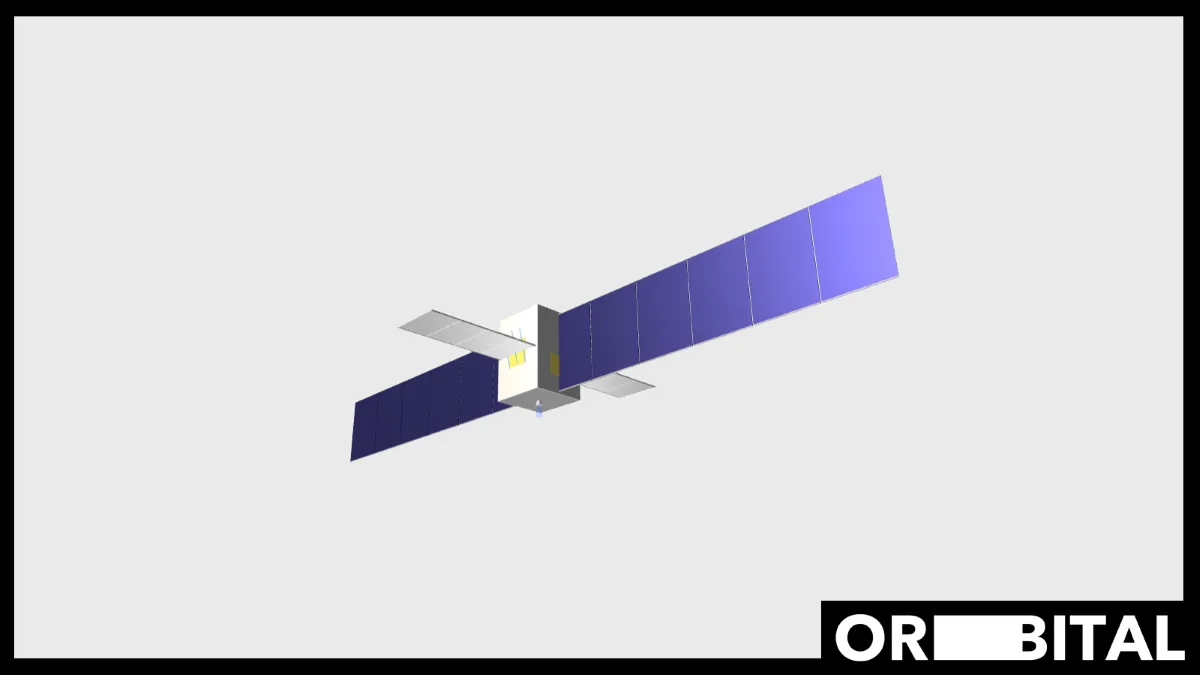
Unlike ground-based systems, this approach benefits from uninterrupted solar exposure in sun-synchronous orbit, eliminating reliance on weather conditions, nighttime cycles, or terrestrial power grids.
Orbital’s infrastructure strategy is shaped by a key technical distinction between AI training and inference. While training large-scale models requires tightly integrated GPU clusters with near-zero latency communication, this architecture is not suited to a satellite environment.
In contrast, inference workloads can be distributed across multiple independent nodes. Orbital is therefore focusing on inference, enabling scalable, parallel processing across its satellite constellation.
The Orbital-1 satellite is set to launch aboard a SpaceX Falcon 9 in April 2027. Its initial objectives include validating sustained GPU performance in orbit, assessing radiation resilience, and, following validation, executing commercial AI inference workloads in space.
The company is also progressing regulatory steps, including filing with the Federal Communications Commission (FCC) to support the deployment of its planned satellite network.
ABOUT POON
Orbital’s Founder, Euwyn Poon, is a Cornell-educated engineer and lawyer. He previously established Spin, a micromobility company later acquired by Ford.
During his tenure, Poon oversaw the deployment of hundreds of thousands of electric vehicles across more than 100 cities, scaling the business to over $100 million in revenue.
Following his exit, he turned his focus to AI infrastructure, identifying energy availability as a critical limiting factor.
“The energy ceiling on AI isn’t theoretical; it’s a real constraint that will impede the advancement of intelligence,” says Poon. “This is the solution.”
This article was produced by the editorial team at North America Outlook and published as part of the Outlook Publishing global network of B2B industry magazines.
Outlook Publishing delivers industry insights, company stories, and sector coverage across manufacturing, mining, construction, healthcare, supply chains, food production, and sustainability.
North America Outlook provides ongoing coverage of organisations and developments shaping industries across North America.